

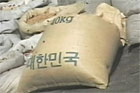
At the Red Cross meeting in Kaesong on Friday, the North Korean delegation made a direct request for food aid which the South Korean government is currently considering. Reportedly the sending of around 50,000 tons of food for the most food insecure groups is under discussion.
On Sunday, a high official inside the administration in Seoul told reporters that anything more than that is unlikely, “In the current situation, massive food aid may be infeasible,” he explained, “but [small scale] aid for the vulnerable classes like infants and children is being examined.”
The officials added, “Large scale aid is beyond the range of pure humanitarian support. In the current situation, that does not match the administration’s policy on North Korea.”
The administration is more likely to supply emergency assistance in the form of corn and other grains, which are comparatively less controversial in terms of transparency of distribution than rice.
The Kim Dae Jung and Roh Moo Hyun administrations provided North Korea with around 500,000 tons of rice in returns for previous separated family reunion events, but the Lee Myung Bak administration has thus far maintained the belief that food aid must be linked to denuclearization.
With respect to the way the aid would be provided, the official said that the precise method had not been decided; whether to give it independently through the Korean National Red Cross (KNRC) or through inter-Korean cooperation funds provided by the government. “We will collect opinions from several parties at the Ministry of Unification hearing by the National Assembly this week,” he explained.
“The issue of monitoring aid distribution will be separated from the issues of what is included in it or its quantity,” he added. This implies that if corn is sent to North Korea, the Seoul administration may not demand that its distribution be closely monitored.









