

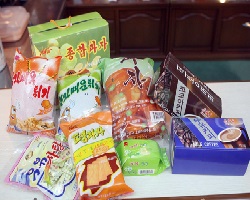
A 15-year-old working at a bakery run by
the donju, or ‘money masters,’ is said to have been wrongfully discharged from
her job after demanding a pay raise and compensation for overtime, Daily NK has
learned.
“Workers had recently raised questions
about management at the individually-run bakery that produces high-end
confectionery goods and bread,” a source from South Pyongan Province told Daily
NK over the telephone on September 20th. “A 15-year-old female employee, speaking for other
workers, asked that the owner provide a pay raise and offer overtime for work
at night. This is what seems to have rubbed the owner the wrong way.”
Daily NK cross-checked news of this
incident with an additional source in the same province.
While the ins and outs of shops like this
bakery are overseen by the donju, permission to operate and official ownership
rights, like most scenarios in today’s North Korea, trace back to the state. In
the case of this bakery and presumably all like it, donju split the revenue
with an affiliated state-run enterprise to secure a buffer from legal
repercussions and stay in business.
This arrangement is typically coupled with additional kickbacks to the same state-run enterprise in exchange for labor. More specifically, this bakery and similar operations gain the right to pluck 20-something female workers from their state-designated workplace and employ them at their shop instead.
A typical donju-run confectionery operation
has family members looking after accounting, supply delivery, and product
management. Production itself is carried out by workers who run on day and
night shifts, carrying out individual tasks. Hiring young teenagers is
officially illegal, but, as in the bakery mentioned in this case, owners are
known to pay Ministry of People’s Security [MPS] units ample bribes to
look the other way.
Other workers are the bakery reportedly
encouraged this adolescent to speak for the group, wagering that her
comparatively young age would result in more leniency for her forthright
attitude from the boss. When the plan went sideways and the young girl was
fired, the source said her fellow workers were racked with guilt for
persuading her to take a stand. They “never imagined the head of the operation
would take such drastic measures,” she asserted.
Many from the group
have, surreptitiously, condemned the current management, calling it “nothing but extreme exploitation.” The source quoted residents
who have dealt with parallel cases firsthand, noting, “They’re even worse than
capitalists, whom are so hated by the republic [North Korea].”
This, distressingly, is still the lesser of
two evils for most. “They lament the reality of wanting to work at these
facilities that are still far superior in terms of supporting people’s
livelihoods and come with much greater flexibility than the Kim Jong Un
leadership,” she pointed out.
Donju first started renovating home storage
areas at the turn of the century to start up production and sales, and these
small factories led to the employment of regular workers who get paid wages by
the month and those that are paid on a daily basis. On the whole, these operations opened with one or two workers but have been rapidly growing.
Most day laborers are female workers in
their teens or 20s, sought out for the pervasive reputation for being fast
learners and come without the burden that comes with being married. These young
women can withstand the intense heat from the ovens and are recognized as
“skilled laborers that come with a good eye for detail,” according to the
source.
“These individually run confectionery
factories far outstrip state-run factories in their popularity because they pay
workers according to market prices, so a lot of people want to work there. That said, regardless of how talented you may be, if
you fall out of favor they’ll sack you without even blinking,” she explained.
Predictably, profit trumps all other
matters. “Management at donju operations is mostly arbitrary, with no consideration
for workers’ opinions and is strictly based on maximizing returns,” she said.
“Even if things go wrong, they can’t go back
to the affiliated state-enterprise from which they came and end up with nowhere
to turn.”
*The content of this article was broadcast
to the North Korean people via Unification Media Group.









