

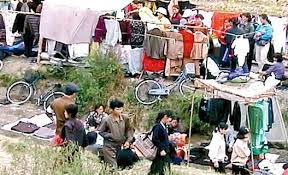
Recently, secondhand South Korean and
Japanese clothing is all the rage in North Korea’s markets. In the early 2000s,
the North Korean authorities tightened restrictions on the import of preowned attire, citing “damage to the national image” as the reason. But these
days, secondhand clothing, disguised as unused apparel, is once
again sneaking into North Korea’s markets.
While the average North Korean purchases
clothing new, the very rich and the very poor purchase clothing secondhand. On
October 20th, Daily NK spoke with a source in North Pyongan
Province who explained, “The high-quality fabric, along with the sophisticated
colors and design of South Korean clothing have contributed to its popularity
among North Koreans. Secondhand clothing originating in the South is sold at high
prices to North Korea’s rich and elite, and secondhand North Korean-made
clothing is sold cheaply to ordinary people.”
Daily NK crosschecked this with an
additional source in South Pyongan Province who confirmed this trend.
Consumers wandering North Korea’s markets
will find self-service displays of both new and used clothing. But the used
clothing is selling at twice the rate of the new. Although new China-made
clothing is sold at cheap prices in Chinese markets, the transportation fees
make it hard for North Korean sellers to offer the same bargains locally.
Hand-me-downs, on the other hand, come into North Korea at bargain rates,
leaving sellers free to jack up the prices by citing its rare availability.
Generally, the imported readymade Chinese
clothing or fabrics are produced by individual companies. Conversely, the
majority of secondhand South Korean and Japanese clothes are sold by
foreign-currency earning enterprises, the Hwagyo [ overseas Chinese], or
individual travelers on special visas who travel abroad and buy goods abroad to sell in the North upon their return.
According to our source, customs officials
will typically try to stop secondhand clothing from being brought into the
country, but the quality of South Korean and Japanese clothing is so superior that
a conspicuously placed label stating the product is new often proves sufficient to ensure officials turn a blind
eye and wave the goods through. As an extra precaution, some Party cadres and other
elites often bribe customs officials to guarantee that the secondhand clothing
passes muster.
Societal perceptions are also shifting under the trend’s influence, the source added, noting that because South Korean
secondhand clothing is expensive, the term ‘secondhand’ is itself becoming a
symbol of wealth north of the border. The connotation of the word is punctuated by the fact that
preowned domestic clothing is referred to as “cheap” rather than secondhand.









