

Egypt’s Mubarak. Libya’s Qadhafi. The dictators of the Middle East are one by one losing power and meeting their demise in the Jasmine Revolution.
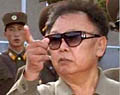
What decisions might Kim Jong Il make if such a people’s revolution were to come about in North Korea?
Under the current conditions it seems hard to imagine a popular uprising taking place in North Korea, but you cannot discount the possibility that one ember could spark something that spreads throughout the whole country, as people’s dissatisfaction with the regime increases.
All those who have run regimes with ultimate power have eventually met their end somehow. It is a simple truth that so few seem to remember. If you look at the decisions made by other dictators once they succumbed to the uprisings in their country it is possible to forecast, at least to some degree, what the future might hold for Kim Jong Il.
The transfer of power in Tunisia and Egypt, where the Jasmine Revolution began, was relatively peaceful. The autocrats resigned and were either exiled abroad or faced a trial in their home country. Tunisian president Ben Ali escaped to Saudi Arabia with his family, but not before being shot by army soldiers.
Egyptian president Hosni Mubarak also succumbed to popular demonstrations and handed power over to a military council. He is now being tried despite being confined to his sickbed. It is the first time in history the leader of a Muslim nation has stood before the law, and Mubarak is spending his days in great indignity.
Yemeni president Ali Abdullah Saleh has ruled that country for 33 years, but recentlyspent three months hiding in Saudi Arabia after fleeing there, apparently to seek treatment for burns suffered in an explosion.
If there was a popular uprising in North Korea, is it possible that Kim Jong Il would admit his mistakes and hand power over to someone else? Most experts think it extremely unlikely.
A researcher for NK Net, Kim Young Hwan told The Daily NK, “Kim Jong Il’s lust for power means the chances of him handing it over to someone else are close to nil. He would probably be even more brutal than Qadhafi was in his repression of the rebel forces.”
Kim believes that Kim Jong Il would be very unlikely to ever seek asylum overseas, but if he did, “There is a high probability that it would be China.”
Choi Jin Wook, a researcher with the Korean Institute for National Unification, says that Kim “might choose China or one of the former Soviet satellite states such as Uzbekistan or Kazakhstan,” although he says that “It would be pointless for him to seek exile abroad because his life would be practically over anyway.”
There is one precedent that Kim Jong Il knows all too well: Romanian president Nicolae Ceaușescu, who was caught by demonstrators trying to flee the country and later executed on Romanian TV.
[imText1]
Ceaușescu’s response to burgeoning demonstrations against his regime had been to mobilize the military to kill the protestors. Once the demonstrations subsided somewhat, Ceaușescu felt sufficiently empowered to bring together a group of his supporters to hold a rally.
The live broadcast of the rally across the country only served to anger many and drive them to protest again, leading Ceaușescu to attempt, once again, to call on the army to quell demonstrations. The irate Romanian people began nationwide demonstrations in which the army eventually took their side.
Sensing the crisis upon him, Ceaușescu plotted to escape the country by helicopter with his wife, but was arrested just three days later after being betrayed by the pilot. The Ceaușescus were found guilty of treason at a military trial and sentenced to summary execution.
Kim Jong Il was apparently greatly shocked to hear that Ceaușescu had been executed by his own army.
In 1990, Kim Jong Il went around showing a video to cadres of Ceaușescu’s execution and the demonstrations preceding it, reminding them, “We too could be killed by the people.” One high level defector who used to work in the National Security Agency has revealed, “We received a full account of the Ceaușescu execution and were told to begin ideological operations.”
Kim Jong Il knew better than anybody else how important it was to control the military, and poured his heart and soul into doing so.
The higher up the official, the more closely they were observed. In some units the unit leader and Party representative would spy on one another, and Kim would receive reports from the Defense Security Command and other informants on the whereabouts of his key commanders at any given time. Any sign of resistance to the state was met with immediate and brutal punishment. Along with this form of control he would hand out special rations, supply superior apartments and medical treatment and occasionally give gifts as concessions to those who stayed loyal.
In December 2003 Iraqi leader Saddam Hussein was arrested after being found in an underground tunnel in his hometown of Tikrit. Qadhafi was also found down a drain in his hometown, Sirte.
Considering how difficult it would be for Kim to decide of his own volition to hand over power and seek exile overseas, it is more likely that he will go the way of Hussein and Gaddafi and resist to the end. In this case large-scale suffering would be nearly inevitable as the popular uprising would more than likely spill over into a civil war.
“Kim Jong Il is different from Qadhafi in that if he sensed that the conflict was not going in his favor you couldn’t rule out the possibility he would go into exile overseas,” Kim of NKnet conceded. But, he added, “Kim would suppress the rebel forces and resist to the very end.”







