

[imText1]On April 1st, North Korea placed an order banning the use of all Japanese products.
Inside sources informed on the 27th, “Nissan, Toyota’ vans are prohibited from entering Pyongyang. Japanese cars are being retrieved and the owners penalized a hefty fine.”
One source said, “Bans apply to all Japanese cars newly registered. Japanese trucks with reefers will either be destroyed within 3 years or sold compulsorily to China.”
However, a duplicitous scenario is occurring where famous movie stars, sportsman and officials who received cars as gifts from Kim Jong Il are excluded from this order. Apparently, these cars pass through checkpoints by displaying a “gift statement” indicating that the car was presented by Kim Jong Il.
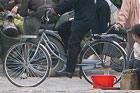
This ban has not only affected cars but other Japanese items including bicycles, electronic goods, food (e.g. soy sauce, soybean paste, dried noodles) and cigarettes. As a result, there has been rising complaints amongst citizens. While authorities are using this opportunity to conspire an anti-Japanese resistance, it does not seem that a complete ban will be made possible.
A broken Japanese car annoyed him
The recent measure reflects “deep feelings of anti-Japanism” a source informed. This response is a confrontation against Japan’s hard-line policy of economic sanctions against North Korea in relation to the abductees issues and six party talks.
From the beginning of this year, North Korea began to label Japan as inferior “Japs” in their official governmental media such as the Rodong Newspaper, Uriminzokkiri (among our Korean Nation). These anti-Japan feelings are an attempt to spread the movement of removing all Japanese goods.
On the other hand, others say that this order has arisen from Kim Jong Il’s brusque feelings. One Chinese reporter who recently visited Pyongyang said, “A broken Japanese car blocked the road on Kim Jong Il’s way back from worship at Keumsusan Memorial Palace (the tomb of Kim Il Sung). He was annoyed by this and ordered the National Defense Commission to “ban the use of Japanese cars.’”
Could the ban to eliminate Japanese goods succeed?
The majority of Japanese cars in North Korea are second hand cars manufactured in the 80s that were smuggled into the country during the early 90s. As illegal trade of cars began to close as a result of opposition from Chinese authorities, North Korea began to distribute the cars to the People’s Safety Agency and National Security Agency in each province, city and district.
On the whole, these Japanese cars are more than 20 years old with a meter 100,000km or more. Traveling on the unpaved and rough North Korean roads, these cars are more than old and rusty.
Though there are welcoming rumors to suggest that the Japanese cars will be replaced with Chinese cars, the car owners are full of discontent.
When a car is removed and destroyed, there is minimal reimbursements. The people greatly affected by these measures are the middle class such as North Koreans of Japanese descent who have been making a living by investment and trade of Japanese cars through relatives in Japan. Though the cars were registered under a business name, the cars were also used for personal use.
Presently, the people who use Japanese electronic goods the most are the people in power such as elite officials from central authorities. These items which have been obtained through bribes include fridges and items by Sanyo and Hitachi. Users, mostly the elite prioritize the goods over products made in China and Russia arguing that they are of better quality. While authorities should first raid these homes to inspect for Japanese fridges and color TVs, the chances of this happening is low.
Regarding the Japanese bicycles
Bicycles are a major form of transportation in North Korea. Hence, one of the items greatly desired by North Koreans is a bicycle made in Japan. Moreover, the starting costs of luxury bicycles such as Miyata and Deky is 1.5mn won (approx. US$500) but is considered so precious that people even hold onto these bicycles as they sleep.
Unlike Pyongyang, it is impossible to regulate bicycle usage in the districts of Hamheung, Shinuiju. If you get caught riding a Japanese bicycle, all you need to do is offer a bribe to the transportation officer promising that you will never ride the bike again. Then the bicycle is returned to you. Rather, it seems that the orders have provided yet another means of getting additional foodstuffs, cigarettes or extra pocket money for authorities.
In addition, there is large consumer preference for Japanese cigarettes and foods including soybean, soy sauce and dried noodles. Particularly, North Korea’s elite who have acquired a taste for these items are mostly unsatisfied by the measures. In the past, a packet of popular “Seven” cigarettes cost 3,000 North Korean won, equivalent to an average worker’s monthly wage. Recently, the cost of the cigarettes escalated three-fold, now selling for 11,000won a packet.
No consistency in policy, citizens waiting relaxed
Kim who lives in the border regions reminisced, “They’ll probably let it go. In the 90s, people were ordered not to smoke Western cigarettes, but it ended in nothing” and informed on the current atmosphere, “People are waiting in a relaxed mood for the order to be appeased.” The main reason behind these vibes comes from the people’s understanding that there is no consistency in the North Korean government’s policy.
In February 1993, an order was made prohibiting the distribution of Western cigarettes but it ended in failure. Even in January of this year, an order prohibited the use of dollars. However today, people are permitted to use dollars the source relayed.
Furthermore, the recent measures are again inconsistent with the North Korean government’s policy of advancing relations with Japan. Meanwhile, owners of Japanese bicycles in Shinuiju and Hamheung are storing their bikes in their homes as they wait in anticipation for authorities to remove the order.









