

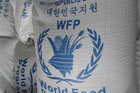
More than six million North Koreans are in a crisis state, and more than 430,000 tons of international assistance is needed to feed the most vulnerable, the UN has concluded.
According to the UN report, North Korea’s traditionally poor food status has been exacerbated by summer floods and an unusually harsh winter.
The report was penned following a joint investigation by the World Food Programme, UN Food and Agriculture Organization and UNICEF between February 10th and March 10th this year in 40 administrative areas across all the country’s nine provinces.
Another, similarly bleak report was released at the end of February by a team of five American charities following a visit to three provinces (North Pyongan, South Pyongan and Jagang) over the course of a week in the middle of the month.
In that report, the five organizations, Christian Friends of Korea, Global Resource Services, Mercy Corps, Samaritan’s Purse and World Vision, said the North Korean authorities had told them that “50-80 percent of the wheat and barley planted for spring harvest, as well as the potato seedlings, were killed by extreme cold” and that rising global food prices had “made it difficult for the DPRK to import sufficient food supplies.”
That report cited visual evidence of malnutrition, food shortages and “people foraging for wild grasses and herbs,” and called for international food support for children, the elderly and the chronically ill.
Following the two reports, the Ministry of Unification has revealed that a team from the UN’s food agencies, including one of those who conducted the investigation in North Korea, will visit South Korea next week to discuss the matter.
Seoul is cautious as to the veracity of North Korea’s claims of abnormal levels of hunger, and worries that Pyongyang may have another motive, such as inventory building to prepare for a greater degree of public provision next year when the doors to the strong and prosperous state are due to swing open.
In a speech on March 9th, Minister of Unification Hyun In Taek said, “North Korea going around requesting food aid can be seen as preparation based on predictions of future stocks.”
A few days later, a source inside President Lee’s office was quoted as saying, “If North Korea made the call for food aid to prepare for next year, when it has stated that it will launch the strong and prosperous state, then the possibility of food aid being resumed is low.”
However, U.S. Senator for Massachusetts John Kerry called yesterday for food aid to be resumed, asserting that “It is tempting to withhold food assistance until North Korea abandons its pursuit of nuclear weapons or adopts economic reforms. But the North demonstrated during the famine in the mid-to-late 1990s, in which an estimated 5-10 percent of ordinary North Koreans died, that it is willing to allow its people to suffer enormously.”
For its part, the Department of State has yet to take a stance, but departmental spokesperson Mark Toner reaffirmed in yesterday’s daily briefing that “the criteria for food aid are, if you will, apolitical,” but did not elaborate on whether that meant a resumption of food aid would necessarily follow on from the UN findings.







