
Actual working delegation from the International Atomic Energy Agency (IAEA) visited North Korea on the 26th last month. For five days negotiations were made on ways to shutdown, seal and inspect North Korea’s 5 nuclear facilities including the Yongbyun 5MW atom.
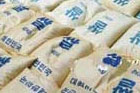
As a consequence, the South Korean government provided North Korea with a range of economic support beginning with 50,000tons of fuel, 400,000tons of rice, raw materials for light industry and humanitarian aid.
Although the stakes of North Korea implementing the initial actions of the February 13 Agreement has increased, many criticize that support to North Korea should have come after the Yongbyun facility had been completely disabled. As the past couple of months saw, the implementation of the initial actions had been delayed due to the issue of Banco Delta Bank.
◆ Fuel assistance finalized prior to implementation of initial actions = First, North Korea will receive the 50,000tons of fuel as stated in the February 13 Agreement. Though the agreement does not specify that South Korea would provide the fuel, the South Korean government revealed to the member states of the six party talks that they would take on this role.
If fuel assistance is provided according to the agreement made at Kaesung on the 29th of last month, South Korea will need to send a cargo ship containing the fuel within the next 2 weeks and everything must be finalized by the 20th.
Consequently, fuel assistance will be completed by the end of this month, if not early next month at the latest. Approximately 28bn won will be used from the South-North Cooperation Fund to provide the fuel assistance.
It seems that the timing of providing the fuel will concur with the visit by IAEA inspectors to North Korea. Recently, the IAEA announced that a special board would meet on the 9th and inspectors sent to North Korea around the 10~12th.
In relation to this, North Korea utilized the words of a U.S. government official on the 3rd enlightening South Korea and the IAEA that the nuclear atom would only be disabled once fuel had been received, Reuters reported. However, at a press conference following the February 13 Agreement, the U.S announced that it would not provide fuel until the atom had been disabled and abolished.
On the one hand, the Bush Administration is concerned that North Korea will pull another postponing stunt whereas North Korea argues that they only want the fuel. Others argue it may be best to wait and see.
◆ Rice loan, support for light industry materials = The rice loan which was suspended following the missile launch and nuclear experiment last year will also resume. An agreement was made in April with the rice loan to begin as of May, however it was reserved as the February 13 Agreement continued to be delayed.
However, the South Korean changed its position the moment the BDA issue was resolved and initiated support from the 30th. The rice assistance will be completed by the end of October. The expenses are estimated to cost 164.9bn won.
While North Korea has consented to IAEA inspectors visiting the country, many argue that providing rice loan is too early since no action has been taken on disabling the nuclear reator.
In addition, the government made an agreement with North Korea in April to provide 70bn won worth of light industry materials according to the implementation of the February 13 Agreement. Furthermore in March, it was agreed that 18bn won worth of measles vaccines, 300,000tons’ fertilizer and other 7 items would be provided.
South and North Korea’s light industry and underground resources will be affected by this decision. Some of the light industry goods South Korea agreed to provide North Korea includes soap, shoes, clothing and polyester. In addition, it seems that collaborative investigations will be made by the South and North to inspect the regions around Geomduk Mine, Ryongyang Mine and Daeheung Mine in Dancheon.
◆ Government, moderate your speed in assisting North Korea = The South Korean government has recently been proactive in increasing its support for North Korea on a variety of levels according to North Korea’s implementation of the February 13 Agreement
Furthermore, the government opened the South-North Cooperation Committee on the 2nd and agreed to providing approximately 20bn won worth of food through the World Food Program (WFP) including 12,000tons of corn, 12,000tons of beans and 5,000tons of wheat.
Though it is not an area directly linked to economic assistance, the government has also decided to provide North Korea with 470mn won needed to educate 15 North Korean instructors to train the North Korean workers at Kaesung Industrial Complex as well as provide 60mn won to send 10 North Korean doctors to study at a hospital in Germany.
In addition, it seems that 100mn won will be used to fund “North Korea IT businessmen cultivation” enterprises initiated by Pohang University of Science and Technology and Syracuse University in the U.S.
In the long term, public opinion argues that this kind of educational assistance does have some sort of significance rather than a “give without asking” attitude.
Nonetheless, despite the fact that the implementation of the February 13 initial actions was delayed two months due to the BDA issue, there is rising criticism against the government’s attitude in wanting to give unsparingly though North Korea has only displayed gestures.
One researcher from a national policy institute who chooses to remain anonymous said in a telephone conversation with the DailyNK, “The role of the South Korean government is critical in maximizing the momentum in implementing the February 13 Agreement” and asserted, “There is a need to moderate the speed of the governments North Korea aid.”