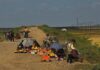


As farmers around North Korea wrap up the fall harvest, most farms in Ryanggang province have been unable to use their threshing machines because of a lack of electricity, forcing workers to connect small threshers to tractor engines or thresh rice by hand.
“While farms throughout the province are busy threshing the rice, power outages prevent farmers from running their normal threshers and force them to connect small threshers to tractor engines. On farms that don’t even have that option, farmers have to thresh the rice by hand,” a source in the province told Daily NK recently.
According to the source, large threshers are installed at all farms, but they are unable to run properly because of frequent blackouts. As a workaround, farmers are threshing the wheat on smaller devices that can be hooked up to tractor engines, but that means buying more fuel for the tractors.
Meanwhile, farm managers are pressuring the workers to boost their output.
Fuel costs deducted from already meager pay
“Party committees at the provincial, municipal and county levels have been stressing output in the farm sector this year and are demanding each farm to make an all-out effort to achieve their production goals. Every day, farm managers head out to the fields and pressure workers to meet their quotas,” the source said.
Farm workers struggle to thresh the grain because of the unreliable power supply, but when they complain about these difficulties, managers simply tell them to deal with the problem on their own. That has left workers very disgruntled, the source remarked.
On many farms, workers have taken to hooking up small threshers to tractors and threshing the grain that way. But tractors inevitably require gas to run, and workers complain that the fuel cost will ultimately be deducted from their post-harvest pay.
“Television announcers brag about all farmwork being mechanized, but that’s divorced from the situation on the ground,” miserable farm workers are heard to say.
“Farm workers are sick and tired of the whine of tractors and the stink of dust and grain day in and day out,” the source said.
“Right now, not only farm workers and their family members but office workers and their families are being constantly mobilized on the farms. Every evening, people come home in a state of complete exhaustion after carrying around sacks loaded with threshed grain.”
Other North Koreans who are mobilized to help out on the farms have their own grievances.
“The government keeps ordering us around without even giving us any rations,” one said.
“Why do I have to work (on the farm) when it’s not even my grain?” another said.
“I wish I could use this time to tend to my own garden,” a third complained.
“There are just a handful of families of office workers in the village. But early every morning, government officials go around banging on doors and waking people up so they’ll head out to the farm. Frustration and fatigue are growing by the day,” the source said.
Even minors are not exempted from the farm mobilization.
“After their morning classes, students in middle and high school are sent off to the farms to move around bags of grain. On a long workday, they may have to stay out in the fields until sunset,” the source said.