

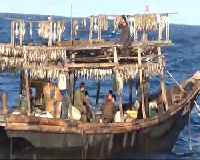
With the hunt for squid in full swing in
the North, residents from various regions are swarming areas adjacent to the
East Sea to get in on the action. News of the large profits one can yield from
squid has spread like wildfire among residents, spurring a growth in seasonal
jobs and jacking up lodging prices in the area.
“The areas touching the East Sea are
embattled in a ‘combat to catch squid’ and bustling with people from all over
the country,” a source from South Hamkyung Province informed Daily NK on the
13th through a phone call. “There are so many people seeking lodging in these
areas that fishing villages and towns around piers have seen their rental fees
increase five times the going rate from last year.”
This was confirmed by a source in North
Hamkyung Province as well as an additional source in Kangwon Province.
The source added, “All the areas around the
East Sea, such as Sinpo City, Liwon County; Dancheon City and Kimchaek City are
teeming with people from other regions. The number of new arrivals significantly
dwarfs that of actual natives to the area.”
Individual residences in these areas are
packed to the rafters with people in search of squid. Most of those in the
itinerant population reside in the attics of these homes but the massive influx
of people has already swallowed up available vacancies, prompting many families
to move temporarily into warehouses and lease their bedrooms to the short-term
tenants.
“Renting an attic runs about 250,000 KPW [31 USD] per month–a fivefold increase compared to last year, when the monthly rent
was about 53,000 KPW [6.5 USD], or roughly the cost of 10kg of rice in North Korea’s
markets,” he said, adding that this surge in prices, despite the fact that
squid season is barely underway, is due to the devastating effects of the
drought on farming, dealing a blow to people’s livelihoods and driving them to
coastal areas to make up the shortfall in squid.
“Piers are teeming with people filling
various roles, such as ‘runners,’ who take squid directly from boats and
then head up distribution; to ‘processors,’ who clean them,” he explained.
Because squid are more marketable if the
processing and time required for drying are shortened, people pay more for workers who can streamline the operation; workers exuding such skills are permitted to keep two out of every
ten squid they process. Many women, he said, stay up well into the early
morning hours to fulfill orders and boost their takeaways.
“There is not a single day when any pier is
quiet,” the source commented.
Eager to the fill the myriad jobs emerging
from the industry, the crowded piers have been described by residents in the
specific areas as “Hong Kong Markets,” since Hong Kong is associated as one the
world’s most prosperous commercial hubs, according to the source.
Another industry has emerged in the shadows
of the squid frenzy: brokers–not recognized officially by the state but whose
activities are largely tolerated– are helping people secure lodging in the
coastal regions in return for 50 high-quality squid. This, according to the source, is far preferable to cash, allowing them to head to other regions devoid of the highly sought-after seafood and yield far greater profits, particularly in exports to China, which comprise approximately 89% of squid sales.









