

[imText1]North Korea’s Special Forces, which total 90,000, make us question whether South Korea or the South Korea-U.S. Alliance could counteract a surprise guerilla attack by North Korea.
Lee Choon Kun, vice president of the Center for Free Enterprise, in his August 30th presentation on the “Comparative Study Between the South and North Korean Militaries” revealed that “Since the late-90s and the implementation of the Sunshine Policy, South Korean society has been faced with a hidden overflow of war threats from North Korea.”
Vice-president Lee stated that “North Korea’s official political response to the Sunshine Policy was to strengthen nationalism and their Military First Politics.” He expressed concern that since then, North Korea has risen to the rank of a nuclear state.
He said, “Looking back on the state of the South and North Korean militaries, we cannot deny the truth that the South Korean military on its own is weaker than North Korea,” and remarked, “Undoubtedly, North Korea is ahead when it comes to mobilizing forces in a time of war.”
Lee noted in particular that “From a qualitative perspective, South Korea possesses superior army, navy and air force equipment; however South Korea falls completely behind in terms of numbers.” Lee concluded, “The South Korean military alone does not have the power to ambitiously deter an attack by North Korea.”
Though South Korea’s population is twice that of North Korea, its military power is only two-thirds that of North Korea. Moreover, North Korea has become a completely “militaristic nation.”
“North Korea has a population of 22.9 million, with soldiers on active duty exceeding 1.1 million and 4.7 million reserves. That means that at least half of adult men are soldiers” said Lee. “Even the Red Young Guards, consisting of 1 million students, have undergone 300 hours of military training. It would not be an exaggeration to say that all of North Korea’s men are soldiers.”
Though North Korean tanks are comparatively inferior in performance to those of South Korea, North Korea is known to possess twice as many.
Vice President Lee said, “North Korea still has the T-34 tank that was crafted by the Soviet Union during the Second World War. Though its dominant type of tank would be the 1970’s T-62, its Soviet Union tanks have the comparative advantages of easy maneuvering and minimal defects.”
On the other hand, “The South Korean military possesses a thousand new K-1 tanks and 80 Soviet-made T-80 tanks. However, the remaining 1,250 tanks are 1950’s M-47 (400 tanks) and M-48 (850 tanks) which in comparison are no more superior to North Korean tanks.”
“North Korea’s leading military forces are assembled within 100km of the Truce Line,” explained Lee. In particular, “The rationale behind North Korea’s 88,000 special forces is to infiltrate and cause a disturbance deep within the enemy front.”
Lee further analyzed that “There is a high possibility that North Korea will attempt guerilla tactics and may pursue strategies to inhibit the use of high-tech equipment possessed by the U.S. and South Korean troops.”
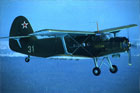
Regarding this, Professor Edward Luttwak, a well known U.S. war strategist, asserted that of North Korea’s military forces, the AN-2 plane and Special Forces presented a particular threat to South Korea.
North Korea’s air force consists of 299 different fighter planes; including the leading warplanes of the former communist bloc, the Mig 29 (20 planes), the Mig 23 (46 planes), and the Chinese J-7 (120 planes, alternatively dubbed the ‘Chinese Mig 21’). Moreover, North Korea is known to possess 80 bombers, which South Korea does not have.
On the other hand, the South Korean air force has 153 F-16’s on standby and a small number of F-15K’s. While the F-16 and F-15 are said to be comparable to North Korea’s Mig29, Vice president Lee explained that with the exception of these two machines, all other warplanes were older generation.
As for the navy, North Korea has the advantage with 88 submarines which can be used in a surprise attack, whereas South Korea only has 20. While these submarines are available for coastal infiltration, South Korea’s navy possesses frigate warships which can be used in surface water combat.
From a naval perspective, one could say that South Korea has a tactical advantage over North Korea; however, from a strategic perspective, South Korea is not in a position to defend all attacks made by North Korea.
Vice president Lee analyzed that “Having completed comparisons between the South and North Korean militaries, South Korea still lacks the ability to independently fight a North Korean deterrent attack.”
“Until now, the South Korea-U.S. Alliance has had a significant influence over deterrent forces,” Lee asserts. However “If the South Korea-U.S. Alliance does not raise its current standards, it will be difficult to maintain deterrent forces on the Korean Peninsula.”








