

Urban residents of South Hamgyong Province are being mobilized to plant corn this spring, Daily NK has learned.
Speaking on condition of anonymity due to security concerns, a reporting partner in South Hamgyong Province told Daily NK on Wednesday that the province received a Central Committee order in April calling for “city residents to provide active labor support to farms from grain planting to harvest to boost food production this year.”
In response, South Hamgyong Province designated Apr. 20 to the middle of May as a farm mobilization period and has moved to mobilize urban residents to plant corn.
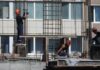
In Hamhung, the city authorities convened meetings in each neighborhood watch unit to convey the order, with people heading to nearby farms to plant corn starting Apr. 20.
Hamhung residents arrive at the farms at 8 AM everyday and work until 2 PM, then they return home after receiving a certificate showing they have completed a day’s work from the farm they worked on. If they have no certificate, they cannot conduct business activities at the city’s markets, the reporting partner said.
“You can only enter the markets if you have a certificate and, in fact, if you’re just walking around without a certificate, you get sent to a labor brigade or a farm to do forced labor,” he said. “It’s not the first time [the authorities have mobilized people for farmwork], but nowadays, if you fail to make a daily wage, your family faces starvation for two or three days. This has caused people to compalin more than before because the farm mobilizations are eating into time they could be spending in the markets.”
The burdens of these farm mobilizations are particularly heavy on North Korean women, who typically provide for their families through business activities at markets.
“Women go straight to the markets to earn money after they finish planting corn,” the reporting partner said. “Many women are lamenting their situation, with their pain doubled when they were already heavily burdened taking care of their families.”
The reporting partner added: “Nobody would refuse to take part in general mobilizations if they actually boosted food production, but despite three general mobilizations to plant grain, the number of food-poor families is increasing compared to those who have enough food to eat. Public discontent is set to increase given the state is forcibly mobilizing economically distraught people for farmwork.”
Translated by David Black. Edited by Robert Lauler.
Daily NK works with a network of reporting partners who live inside North Korea and China. Their identities remain anonymous due to security concerns. More information about Daily NK’s reporting partner network and information gathering activities can be found on our FAQ page here.
Please direct any comments or questions about this article to dailynkenglish@uni-media.net.