

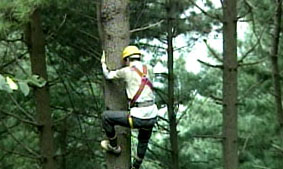
With the arrival of late October, much of the rural North Korean populace has turned its attention to pine nuts. Although even urban dwellers are being mobilized to gather the state harvest, for the residents of farming regions it is the collection of these nuts that really matters. However, as with anything that can turn a profit, there is also conflict.
A source from rural Hamkyung Province told The Daily NK on the 19th, “Right now it is pine nut season, and you can see frequent instances of farm workers and students out in the mountains around here collecting them. In a lot of cases, people with little private farming to do take pretty big risks to earn money collecting pine nuts with their children.”
With high protein and an excess of both vitamin-B and iron, these nuts, which form the core ingredient of pesto sauce, are excellent for combating anemia and are rumored to be a good dietary aid. As such, they sell well in China.
Back in 1967, Kim Il Sung ordered the delivery of pine nut oil to the people of North Korea, and extensive planting of pine nut trees ensued. However, due to their low price, difficult production method and the fact that pine nut season overlapped with the autumn harvest, few people gathered the nuts for sale in the jangmadang.
However, in the late 1990s it was realized that they could be sold in China for a healthy sum, and people starting harvesting them much more widely. Naturally, the Chosun People’s Army began to move in on the trade almost immediately, and friction between soldiers and civilians broke out. Now, the major areas of pine nut cultivation are owned by military units, the security forces etc, and ordinary people have been driven deeper into the mountains in pursuit of the valuable harvest.
A source from Yangkang Province explained, “From the moment they knew that pine nuts could be turned into foreign currency, mountains covered with pine nut trees were taken by the strong state organs. The hill in Kim Jong Suk County has been being guarded by armed reserve forces since August, while the mountain with pine nuts on in Huchang County is being looked after by border guards; access for people is controlled.”
Quite unlike many of North Korea’s other crops, this year’s harvest of pine nuts is also said to be larger than last. Naturally this is driving down the price, with a kilo of the nuts which would have fetched 40 Yuan last year now fetching just 10 Yuan. Nevertheless, that still means 5,200 Won per kilo for the seller which, with rice hovering between 2,000 and 3,000 won per kilo, is still a very attractive sum.
“Although the pine nut price has tumbled compared to last year, they can still be turned into a lot of seed money for farm workers, so the passion for avoiding official censure to go and collect them is still rising,” the source added.







