

At nine o’clock this morning, 82 South Koreans set off for Mt. Geumgang in North Korea’s Gangwon Province to reunify with their family members in the North. For many of the reunion participants, today will be the first opportunity to lay eyes on their relatives since the Korean War.
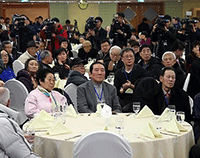
The predominantly elderly participants gathered yesterday in Sokcho, a city in Northeast Gangwon Province. Although the registration period was not scheduled to begin until 2pm, most arrived early at the designated meeting point. The presence of an additional 200 volunteers, 12 medical staff and a throng of reporters allowed for standing room only.
This round of reunions presents a unique set of challenges, as the participants will be travelling to an area that has seen an unusual amount of snowfall in recent weeks.
“It’s cold at Mt. Geumgang… the doctors will do the rounds after the event to check up on them. As of yet, there are no individuals who have had to cancel their trip over health concerns,” a visiting doctor told press.
For one participant, however, the first opportunity to see her children in over 60 years hangs in the balance. 91-year-old Kim Som Gyeong arrived early to Sokcho on the 18th, but collapsed after showing signs of a cold. While she is resting now, it remains uncertain if she will be able to meet her 66-year-old son and daughter who were left behind in North Korea.
The first to arrive at Sokcho yesterday was 91-year-old Baek Gwan Soo, who left his home in Incheon at dawn, anxious that bad weather would delay traffic. Baek has prepared three large bags filled with gifts of underclothes, medicine and cosmetics for his grandson that he will meet for the first time today. He also hasn’t forgotten to include the popular snack Choco-pies, something that he hopes his now 30-year-old grandson will enjoy.
“It seems I am the only one living comfortably (in the South), and I am deeply apologetic to my grandchild. I am worried he will look at me with resentment,” Baek said.
72-year-old Park Chun Jae is hoping to meet with two of his nephews. However, a recent fall at home resulted in an extended stay in hospital. Despite only being released two days ago, Park was adamant to make the journey. “Even though I am in ill health I desperately wanted to see my nephews, so I came,” he told reporters.
Another reunion participant is in possession of the last will and testament of his late father. 66-year-old Kim Myong Bok is hoping to reunify with his older sister, his paternal aunt and his cousin.
“My father left his eldest daughter behind in the North, and he carried that for the rest of his life. My father was deeply sorry about it. When my mother and father fought my mother would curse him about it, and he would feel even worse about leaving her there,” Kim explained.
“The two-page will clearly states at the beginning, ‘Even if I die, you must find your elder sister.’ The second page provides details of real estate left behind in Hwanghae Province,” he continued.
93-year-old Cho Gi Dok, originally from North Korea’s South Hamkyung Province, is travelling with his younger son to meet his eldest son who was born in the North in 1950. Cho’s lifelong dream to see his sons meet is about to come true, causing “happiness beyond words.”
Cho has prepared two bags containing underwear, a goose down jacket, toothpaste, soap and other daily necessities. He had originally hoped to reunite with his wife in the North, but her worsening health means he will now meet with his son and daughter-in-law.
92-year-old Park Yun Hyong is traveling to reunite with his eldest daughter. His son, who is accompanying him, tells of the bittersweet nature of the reunions.
“As you can see, we are more upset than happy. We are well aware of the deep sadness and longing we will feel when we have to separate again in a few days. My father is 92 years old. I’m already concerned about the shock he will suffer. I’m sorry that only we have received permission to go. It also seems there will be some things we can’t talk about because of the restrictions. I believe it would be better if (the separated families) were allowed to write letters to one another, rather than attend a one-off reunion,” he lamented.







