
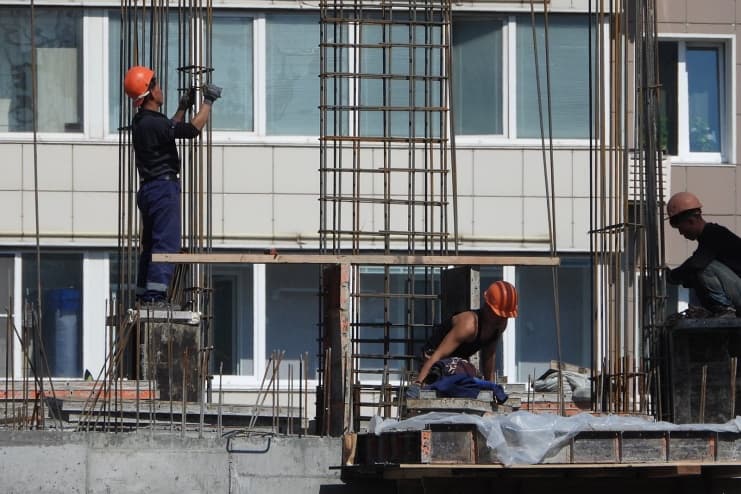
Pyongyang residents are growing wary of volunteering for overseas labor dispatch in 2026, as fears of being sent near the front lines of Russia’s war with Ukraine increasingly outweigh the financial incentives that once made such postings highly coveted.
A source in Pyongyang told Daily NK on July 3 that in the past, people would even pay bribes to secure a spot on an overseas dispatch list, but that these days few are willing to volunteer for postings in Russia. As rumors spread that Ukrainian strikes are reaching major cities such as Moscow and St. Petersburg, the source said people increasingly ask why anyone would go earn money in a war zone, question whether a few dollars is worth becoming cannon fodder, and conclude that life is worth more than that.
Notably, these rumors are not merely idle talk. They appear to be shaping residents’ actual decisions about whether to accept dispatch assignments. Although the information North Korean authorities provide is extremely limited, outside reports of Ukrainian drone strikes and bombings targeting Russian territory have been spreading through various channels, reaching even residents of Pyongyang.
In the past, North Korean people viewed overseas dispatch as an opportunity outweighing its risks. With factory wages alone insufficient to cover living costs, a posting abroad was seen as a chance to raise capital for a business, renovate a home, or cover a child’s wedding expenses. Bribing the officials responsible for dispatch selection became standard practice as a result.
More recently, however, anxiety about being sent near a war zone has begun to outweigh the prospect of earning money abroad. Even after paying a bribe, how much a worker could actually earn remained uncertain, and with safety concerns in Russia added to the mix, more people are questioning whether going abroad is worth it at all.
Anti-corruption crackdown makes bribery riskier as income options grow at home
North Korean authorities’ crackdown on corruption also appears to be contributing to the shift. Kim Jong Un has repeatedly called for rooting out corruption among officials and emphasized the need for stricter discipline. At the enlarged second plenary meeting of the Ninth Central Committee of the Workers’ Party of Korea, held June 20-22, authorities publicly disclosed that Maj. Gen. Park Hui Chol, deputy director of the organization department of the Korean People’s Army General Political Bureau, the body that oversees ideological discipline within the military, had been referred to legal authorities on corruption charges.
Such moves do not necessarily root out corruption that remains deeply entrenched within the system. During periods of intensified crackdowns, overt bribery often decreases temporarily, only to continue through more covert channels.
Bribery involved in overseas dispatch selection may also decrease for a time but is unlikely to disappear entirely, the source said. Still, the once-fierce competition to pay any price for a spot abroad has weakened somewhat as the appeal of dispatch fades. The source said many people now worry that paying a bribe could get them caught up in a crackdown, and that even those who make it abroad fear the consequences of being caught later.
Changes in North Korea’s domestic economic conditions are also cited as a factor. Some factory and enterprise workers reportedly receive a portion of goods produced or higher wages tied to output, and side businesses in markets or family trading have also become more common. Analysts say this is contributing to reluctance to accept postings that require long separation from family under intense surveillance and control.
Pyongyang residents in particular have relatively greater access to outside information and are more likely to have contact with people who have worked abroad. Rumors that workers sent to China or Russia often received far less than the wages they were promised, faced strict restrictions on movement and communication, and risked forced repatriation or retaliation against family members if they complained have gradually eroded the appeal of overseas dispatch.
Pyongyang still relies on dispatch labor as revenue source, shifts recruiting to rural areas
Despite this shift, North Korean authorities continue to view overseas labor dispatch as an important source of foreign currency and reportedly plan to keep expanding labor exports to China, Russia, and friendly Southeast Asian countries.
However, signs suggest recruitment efforts are shifting away from cities with greater information access, such as Pyongyang, toward rural areas. Because rural residents have less exposure to information about conditions at dispatch sites, the risks of Russia’s war, or exploitative conditions in Chinese factories, many continue to view overseas dispatch as a moneymaking opportunity and apply regardless.
“People in Pyongyang hear all kinds of things, so they’re cautious,” the source said. “But in rural areas, many still believe they can make money by going abroad. For the government, it may be easier to recruit people who talk less and know less.”
This underscores that the overseas dispatch system also reflects a broader information gap. Residents exposed to outside information are more likely to recognize the risks and hesitate, while those without such access remain more vulnerable to exploitation and control.
North Korean workers dispatched abroad undergo intensive ideological education before departure. Once they arrive, their passports are confiscated, and they face severe restrictions on movement outside their dormitories and worksites. Most of their wages are withheld by North Korean authorities and dispatch agencies, leaving workers with far less money than they were promised. Attempts to escape or file complaints can bring punishment not only for the worker but also retaliation against family members back home.
Given these conditions, providing North Korean people with accurate information about overseas dispatch could serve as a meaningful tool for protecting their human rights, observers say. Residents fixated solely on the prospect of earning money need to understand the realities of wage withholding, surveillance, the risk of forced repatriation, and the safety threats posed by unstable conditions abroad.
Kang Dong-wan, a professor at Dong-A University, told Daily NK that outside information should be viewed as a catalyst capable of transforming the consciousness of North Korean people and driving broader social change. He said access to information allows people to obtain what they need to protect their human rights and themselves, so restricting that access lowers the overall level of human rights protection.
He added that protecting workers dispatched abroad ultimately starts with information, since recognizing unjust conditions through outside information is the first step toward improving human rights.
Kang also said access to information is a matter of universal human rights that should not be constrained by political or ideological interpretation, and that the international community should pursue the spread of information alongside sanctions on North Korea rather than relying on sanctions alone.
Reporting from inside North Korea
Daily NK operates networks of sources inside North Korea who document events in real-time and transmit information through secure channels. Unlike reporting based on state media, satellite imagery, or defector accounts from years past, our journalism comes directly from people currently living under the regime. We verify reports through multiple independent sources and cross-reference details before publication.
Our sources remain anonymous because contact with foreign media is treated as a capital offense in North Korea — discovery means imprisonment or execution. This network-based approach allows Daily NK to report on developments other outlets cannot access: market trends, policy implementation, public sentiment, and daily realities that never appear in official narratives.
Maintaining these secure communication channels and protecting source identities requires specialized protocols and constant vigilance. Daily NK serves as a bridge between North Koreans and the outside world, documenting what’s happening inside one of the world’s most closed societies.