

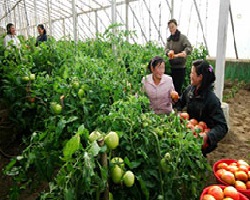
As scores of residents pour their energy
into tending their own small plots of land, many in South Pyongan Province are
simultaneously growing richer off of winter greenhouse crops, Daily NK has
learned.
A source in South Pyongan Province told
Daily NK on November 30 that fruits and vegetables being grown in winter
greenhouses are commanding high prices. The newly monied class, or ‘donju,’ in
the capital crave fresh strawberries and cucumbers in the winter, and sellers
in Pyongyang’s brisk market can earn as much as $2,000 throughout the winter
months.
This news was confirmed by an additional
source in the same province and a source in the capital.
The majority of these fruits and vegetables
are grown in mining regions such as Anju and Deokcheon and distributed in
Pyongyang, where the donju gobble them up in markets and restaurants. Every
morning, servi-cha [buses, trucks] are waiting next to Sinuiju station to load
up with boxes of delectable fresh farm goods and ferry them to the eager
consumers of Pyongyang.
The concentration of greenhouses in mining
regions is due to the reliance on coal to heat up the space and grow the
produce. Growers establish ties with Pyongyang directly to sell their goods on
the wholesale and retail markets. Currently in the market, 1 kg of strawberries
is commanding a price of 15,000 KPW (about the cost of 3 kg of rice), a price
that is expected to double in February around the Lunar New Year and Kim Jong
Il’s birthday.
According to the source, “fruit and
vegetable sales in midwinter can guarantee a person more foreign currency than
North Korean laborers dispatched to Russia for logging.”
Although it is possible to purchase various
items at the market on credit, demand for winter fruits and vegetables is so
strong that they can only be purchased in cash. The rise of the the wealthy
class in Pyongyang is the primary driver behind this demand.
“This method of growing fruits and
vegetables in greenhouses provides enough for one family to get through the
winter,” she asserted, explaining that families get together and delegate the
tasks of building greenhouses and carefully controlling the temperature and
water supply to ensure quality crops to be sent out for distribution.
“These greenhouse growers are experts,” she
said.
Although all of the necessary supplies to
grow such crops, like plastic, coal, fertilizer, seeds, and so on, are readily
available to anyone in the markets; greenhouse growers must procure their own
water, which is done by using personal wells or natural sources.
Cucumber and strawberry seedlings and baby
plants can be bought in the general markets by anyone with money, so growing
greenhouse crops in the winter is a simple undertaking. Greenhouses are
insulated with three layers of Chinese-made plastic and temperature controls
are maintained through coal fire.
Although strawberries seem like hardy
plants, failure to maintain the proper amount of moisture can kill them
quickly. Strawberry farmers water each plant by spraying the roots individually
with water, attending to them as carefully as they do their own children. In
fact, the source said that many farmers go so far as to practically live in the
greenhouses to acquire the prowess necessary to successfully raise winter
strawberries.









