

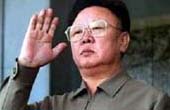
[imText1]As discussions intensify over the issue of change to North Korea’s regime, concerns over the power division of military authorities on the possible onset of Kim Jong Il’s sudden death is on the rise.
Director Ken Gause of the CNA Corporation in the U.S. stated his opinion in the San Francisco Chronicles on the 7th (local time) arguing that there is a greater chance that military authorities will manipulate their power and use North Korea’s nuclear weapons rather than North Korea’s nuclear weapons ending in removal.
He claimed “While we might consider North Korea an opaque and unpredictable regime today, it is nothing compared to what it will be if Kim were to pass from the scene with the regime remaining intact” and added “Power within the regime may be distributed among a number of warlords, some of whom may have access to nuclear weapons.”
Director Gause stated “After all, Kim is getting and is not in great health” and asserted “We will likely be facing a nuclear-armed North Korea with as many as 13 nukes and a fuzzy sense of who is in control.”
He prospected “The ruling Korean Workers Party has been eviscerated during the past decade and power increasingly shifted to the military as part of the country’s military first policy” and added “Kim has three sons, none of whom is capable of being anything more than a figurehead for an increasingly paranoid high command.”
Furthermore, he argued “The fact that Kim has spent a decade ensuring that he is the sole linchpin within the security apparatus, however, makes it highly questionable that another leader could step into his shoes.”
He added “While a recent South Korean National Assembly report suggested that Gen. O Kukyol, head of the North Korea’s elite special forces, might be just such a figure, his ability to consolidate control is questionable.”
Also, Director Gause criticized “If North Korea remains a pariah state, paranoia within the regime and its military will continue to grow. The chances of President Bush’s nightmare of proliferation and terrorists getting a hold of nuclear weapons from North Korea will become more of a possibility than it is today” and “with no center to keep things in check, an increasingly fearful Korean People’s Army might heed the advice advocated by some of its more hard-line commanders and strike out militarily.”
Regarding countermeasures by the U.S., he asserted “While there is a need to punish North Korea for violating international norms, embargoes and other sanctions” he said “at some point, the United States will have to figure out a way to talk directly with the North Koreans.”
Though the U.S. government conducting partner talks with North Korea will probably not have direct influences on Kim Jong Il, it may prove to be an affirmative sign to future leaders of North Korea.
He concluded “Encouraging a fragile leadership to be less fearful of the outside world — and not absolutely convinced that we are out to destroy it — has to be preferable to the alternative.”









