

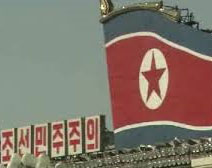
North Korea’s most recent winter “peace offensive” is causing concern in South Korea, where expert analysts caution that Pyongyang could be trying to create a favorable situation for its strategic goals, which may even include some form of provocative action against the South.
On the 16th, North Korea’s
National Defense Commission proposed that that the two Koreas should cease
rhetorical attacks on one another from January 31st. What the North
called its “significant suggestion” was followed on the 18th by a
statement of Pyongyang’s “will to improve North-South relations.” Finally,
today, Rodong Sinmun again pressed the suggestion, offering renewed support for
a conciliatory policy toward the South.
“If the South Korean authorities give up
their narrow-minded conception of confrontation and make a bold decision to
join hands with their compatriots in the North, there would be no
insurmountable difficulties in mending inter-Korean relations,” the most recent
Rodong Sinmun piece declared. “This,” it noted with reference to the era of the
late President Kim Dae Jung, “was evidenced by the June 15 era of
reunification.”
However, the South Korean government has already
stated its view of the North’s apparent move toward dialogue, calling it a “camouflaged
offensive” strategy. On the 18th, President Park Geun Hye, who is now in
Switzerland on the second leg of an overseas tour that has already taken her to India, cautioned the Ministry of National Defense and other related
departments, “The more North Korea engages in these kinds of propaganda
offensives, the more we should ensure thorough defense against provocations against
the South.”
Ministry of Unification spokesperson Kim
Eui Do noted during a regular briefing earlier today that there is also an irony to the North Korean proposal. “The one doing the
slandering is North Korea,” he declared. “They ought not to wait until Lunar New Year [January
31st]; rather, they must cease their slander immediately.” He further added
that if the North were serious then it would undertake sincere actions, rather than relying on periodic media
statements.
South Korea has just historical cause to doubt the sincerity
of North Korea’s approach, since such things happen regularly
at the beginning of a year. Moreover, North Korea has often conducted past focused peace
offensives immediately before acting in the opposite manner. Most memorably, in 2010 they began in a
similar vein, triggering positive media reviews, but then the Cheonan incident occurred
in March and the island of Yeonpyeong was shelled in November, casting
inter-Korean relations into the deep freeze.
One North Korea expert who requested anonymity explained, “Hitherto, North Korea has repeatedly shown a pattern of ‘provocation after dialogue peace offensive’ and ‘dialogue peace offensive after provocation.’ Thus the possibility of a provocation cannot be ruled out.”
“This places the responsibility for causing relations to falter onto the South,” he went on. “They are also going back and forth over the joint military drills, so there is a possibility that they are accumulating the pretext for an attack on the South.”
However, Oh Gyeong Seob of the Sejong Institute told
Daily NK that the rationale may be economic. “They are facing a situation where they cannot find a breakthrough to
solve their economic problems. They are showing a positive attitude toward
improving inter-Korean relations in order to normalize their economy,” he said. “Through improved
relations, they want to find an exit through aid, assistance, and more
active inter-Korean economic cooperation.”







