

The popularity of North Korea in Zimbabwe may never have been lower than it was in 1985 when the 5th Brigade of the newly independent Zimbabwe National Army, a unit trained by 106 North Koreans under an agreement between President Robert Mugabe and Kim Il Sung, had finished crushing rebellious elements in Matabeleland, a region in the south west of the country, killing an estimated 20,000 people.
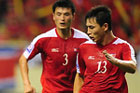
However, North Korea’s popularity is currently also pretty low in the run up to the start of the World Cup in South Africa. The North Koreans are apparently facing the possibility that their invitation from the government of Zimbabwe to train and play warm-up matches in the country might be rescinded following protests from various groups opposed to the opening of old wounds by the presence in their midst of a country which they hold partially responsible for the slaughter almost 30 years ago.
Tensions have not been helped by insensitive plans to have the North Korean team train in Bulawayo, the second largest city in the country but, more importantly, the heart of the Matabeleland region. Though Tourism Minister Walter Mzemba has said that the subsequent suggestion of alternative training facilities in Harare is down to differences in the quality of those facilities, the implication is that the threat of protest in Bulawayo present too much of a risk.
In an interview with AP, Methuseli Moyo, a spokesman for the opposition Zimbabwe African People’s Union party said that moving the North Koreans to Harare is an inadequate response. “We have not forgiven them for that,” Moyo said. “We are totally opposed to the North Koreans coming to any part of Zimbabwe. We don’t want them here. We are going to follow them (to Harare) and demonstrate against them.”
Meanwhile, in a Voice of America interview yesterday, Paul Themba Nyathi, a former rebel fighter in the Matabeleland region said that inviting the North Koreans shows above all that elements in the unity government are not committed to reconciliation. “I expect all people to pull together to ensure that the North Koreans will be barred from training in Zimbabwe,” Nyathi said.
However, for the time being at least, the North Koreans are still officially welcome. “It is important that the Zimbabwe government deals with this matter in a very sensitive way and does not ignore the history of North Korea here, and does not do anything that might inflame passions or reopen old wounds,” David Coltart, Zimbabwe’s sports minister and a member of the Movement for Democratic Change (MDC) faction in the unity government conceded.
But, he added, “I don’t think it is right to attack a group of young players for what happened 27 years ago in this country.”
Zimbabwe’s unity Cabinet is due to discuss the issue of North Korea next week, after its key leaders return from the World Economic Forum on Africa in Dar es Salaam, Tanzania.







