
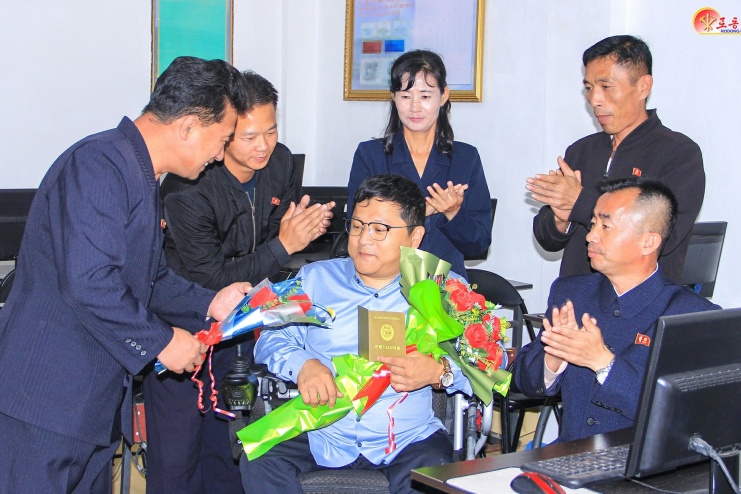
North Korea is highlighting welfare benefits for disabled citizens to project an image of human rights respect amid international criticism. However, North Koreans with disabilities face such severe social stigma—including mockery and mistreatment—that many rarely venture outside their homes.
“When kids teased a disabled person in Songnim on Aug. 29, it sparked a fight between adults in the neighborhood. The mother of a disabled person got into a physical altercation with elementary school students who had been cruelly making fun of her disabled child,” a source in North Hwanghae province told Daily NK recently.
A rare trip outside ends in humiliation
The source said the disabled person—referred to here as “A”—is a 19-year-old with kyphosis, a spinal condition that causes hunched posture and is often cruelly called “hunchback.”
Due to widespread prejudice against people with disabilities in North Korean society, “A” had never attended school and rarely left his house, knowing that neighborhood children would inevitably mock him with cruel language.
On the day of the incident, “A” was making one of his rare trips outside when three elementary school children spotted him on their way home from school. The children began pointing at “A” and ridiculing him.
Overwhelmed with humiliation, “A” ran home in tears. When his mother learned what happened, she stormed outside, grabbed the elementary students, and began hitting them.
Shocked neighbors quickly separated the mother from the children. But shortly after, she was confronted by the parents of the students she had struck.
The angry parents told the mother that none of this would have occurred if she had kept her “hunchback” child at home—a comment that predictably led to a brawl.
“The neighborhood watch unit leader and local police intervened, but the shouting and arguing continued until late evening. The incident wasn’t resolved peacefully, and tensions still linger in the neighborhood,” the source explained.
Laws exist but attitudes persist
The incident highlights the difficult reality faced by disabled individuals and their families in North Korea.
In 2003, North Korea enacted the Protection of Persons with Disabilities Act, and the regime continues to publicize measures for disabled citizens, including special education, rehabilitation services, and welfare facilities.
However, the source noted that North Koreans with disabilities remain excluded from schools and social activities while facing scorn, mockery, and hostility.
“When disabled people leave home, neighbors commonly gossip about them and unruly children make fun of them. Both the disabled individuals and their families constantly worry about others’ judgment. Everyone knows that vocational training and sporting events for the disabled are just for show,” the source said.
Rather than using propaganda to improve its image and deflect international criticism, the source argued, North Korea needs to make genuine efforts to change social attitudes toward people with disabilities.