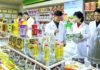


North Korean candy and snacks are quietly finding a market in northeastern China, where defectors, longing for home, are buying them despite prices that exceed comparable Chinese products.
A Daily NK source in China said recently that confectionery produced in North Korea is currently being sold both online and at brick-and-mortar stores in Changchun and Changbai in Jilin province, as well as in Dandong in Liaoning province. The two northeastern Chinese provinces border North Korea and are home to significant communities of North Korean defectors.
Products in circulation include fruit-flavored candies and cookies from the Sonhung Food Factory, soybean candies and caramels from a food factory in Nanam district of Chongjin in North Hamgyong province, and cod liver oil candy from the Sinpo Fish Canning Factory.
Soybean candy is particularly freighted with meaning for North Korean defectors. It was historically distributed to children on major national holidays, including the birthdays of former leaders Kim Il Sung and Kim Jong Il. Cod liver oil candy, meanwhile, has long been promoted to North Korean people as a remedy for eye health and immune function.
A 500 to 600 gram bag of these products sells for around 40 Chinese yuan (approximately $5.50) — higher than the price of comparable Chinese goods. Even so, demand among defectors in the region remains steady.
Nostalgia and North Korea-China trade
“I recently spent 120 Chinese yuan (approximately $16.50) on cod liver oil candy and cookies,” said one defector living in Jilin province. “The packaging has become much more refined than before, so I was worried the taste might have changed, but it still had that familiar flavor from home.”
The defector described the purchase as driven less by the taste itself than by a need to reconnect with memories of family. “I find myself buying them because I miss the days when I lived with my parents and siblings,” the source said. “I sometimes cry alone while eating them, wondering whether I’ll ever see them again.”
A defector in Liaoning province echoed the sentiment. “You can easily find and buy North Korean food products at stores and online now,” the source said. “Even if the price is high, I buy candy and snacks to think of my parents and siblings back home.”
Beyond the emotional pull for defectors, upgraded packaging on North Korean confectionery is also drawing curiosity from Chinese consumers. “People here buy them out of curiosity when they see the packaging,” the source said, adding that local interest was helping to sustain sales volume.
The source noted that North Korean products now circulating in Chinese markets extend beyond confectionery. Cosmetics produced by North Korea-China joint ventures and North Korean liquor intended for export are also in active distribution.
Looking ahead, the source suggested the trend is likely to accelerate. Pointing to recent normalization signals between Pyongyang and Beijing, including the resumption of passenger rail service between the two countries, the source said bilateral trade is poised to expand further. “North Korean products with competitive pricing or improvements in quality and design will likely enter the Chinese market in greater numbers going forward,” the source said.
Reporting from inside North Korea
Daily NK operates networks of sources inside North Korea who document events in real-time and transmit information through secure channels. Unlike reporting based on state media, satellite imagery, or defector accounts from years past, our journalism comes directly from people currently living under the regime. We verify reports through multiple independent sources and cross-reference details before publication.
Our sources remain anonymous because contact with foreign media is treated as a capital offense in North Korea — discovery means imprisonment or execution. This network-based approach allows Daily NK to report on developments other outlets cannot access: market trends, policy implementation, public sentiment, and daily realities that never appear in official narratives.
Maintaining these secure communication channels and protecting source identities requires specialized protocols and constant vigilance. Daily NK serves as a bridge between North Koreans and the outside world, documenting what’s happening inside one of the world’s most closed societies.