

North Koreans living near the front lines were overjoyed after the regime removed propaganda loudspeakers aimed at South Korea.
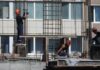
A source in North Hwanghae province told Daily NK recently that the II Corps, stationed on the western front, received orders from the Supreme Command to remove propaganda loudspeakers at 5 pm on Aug. 8. Accordingly, an engineering battalion with the corps reportedly began working on removing the loudspeakers that same night.
The Supreme Command’s orders explained that it was taking “corresponding measures” in response to South Korea’s removal of 20 propaganda loudspeaker installations on orders from President Lee Jae-myung on Aug. 5.
But the Supreme Command also described the measure as part of a “gradual adjustment of our psychological warfare against South Korea,” hinting that more adjustments may be on the way.
After border residents learned from military families that the Supreme Command had ordered the removal of the loudspeakers, a mood of muted jubilation has set in.
Border residents didn’t dare to openly celebrate the move, but in private, they have been joyfully embracing and consoling each other over their past hardships, which are now over.
The real victims of psychological warfare
“People living on the front are deeply moved about escaping the pain they’d endured for so long,” the source said.
The fact is that border region residents were the greatest victims of the deafening loudspeaker broadcasts.
The broadcasts weren’t just propaganda—they also contained bizarre sounds, including grinding metal, howling ghouls and hooting owls designed to drown out propaganda broadcast by South Korea. On top of that, locals also had to endure regular lectures urging them to persevere.
Soldiers on the front also had to put up with the endless noise, with many reporting headaches and becoming extremely sensitive to the smallest sound.
People living on the front—who are ultimately the biggest beneficiaries of the loudspeakers’ removal—were clearly delighted with the move. Some danced with joy and wordlessly embraced friends and relatives, while others gathered for a celebratory drink.
“The Supreme Command’s order to remove the loudspeakers was welcome news since it frees locals from the oppressive noise. Some people have been joking that market vendors won’t be able to sell rubber earplugs anymore,” the source said.
Earplugs were an essential item on the front, where people struggled to go about their day because of noise-related stress. Demand for the earplugs was so high, the source said, that a decent living could be made by assembling large quantities for sale.
Some locals expressed gratitude to the South Korean government and President Lee Jae-myung for preemptively removing the propaganda loudspeakers, the source added.
“A few locals said that Lee had spared people on the western front from the pitiful fate of either going deaf or going crazy. Everybody agrees that it was Lee who brought this glorious day of liberation for their ears,” the source said.