

Attendance is improving at schools in Kimchaek city, North Hamgyong province. Authorities there have eased a longstanding practice that forced students and parents to cover school repair costs. A source in North Hamgyong province told Daily NK recently that the shift is already showing results.
According to the source, every school in Kimchaek now has an assigned factory or enterprise responsible for facility repairs. The support system covers elementary schools and both levels of middle school in the city. Officials say the change has led directly to better attendance.
For years, schools routinely passed certain costs onto students and their families. That included classroom whitewashing and painting, desk and chair repairs, window fixes and cleaning supplies. The constant requests frustrated parents. Eventually, they began keeping children home instead of paying.
Homeroom teachers got a nickname over the fees
“Schools collected so many fees and materials that people started calling homeroom teachers ‘collection captains,'” the source said. Families with the least money often stopped sending their children to school altogether, rather than keep paying. That decline in attendance became a serious problem, according to the source.
Kimchaek city responded by leaning on a Workers’ Party policy. The policy treats education as a shared responsibility across society, not just a burden on families with children. Officials began urging even childless residents to contribute to school support. They also directed factories and enterprises to take an active role in improving conditions at their assigned schools.
The move appears to draw on North Korea’s Education Sponsorship Act, revised last year. The law requires the Cabinet, the central education authority and local people’s committees to assign a sponsoring organization to each school. Sponsoring organizations must then track conditions at their assigned school and address problems as they arise.
Junior middle schools and senior middle schools operate as administratively separate institutions in North Korea. In Kimchaek, though, many of them share buildings. That means facility management and repairs are often handled together in practice, according to the source.
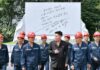
From late June through early July, factories and enterprises serving as school sponsors carried out repairs ahead of the rainy season. Workers whitewashed and painted classrooms, fixed windows and doors, and inspected and repaired leaking ceilings and drainage systems.
“In the past, the school would have gone straight to parents for money or materials during this kind of work,” the source said. “This time, the factories and enterprises covered all of it themselves. The burden has dropped a lot compared to before. Parents are relieved. They say they can finally breathe a little.”
The source said the change is already showing up in enrollment. “In the past, a lot of parents felt too burdened to send their children to school,” the source said. “There was so much to prepare and pay for. Now that’s easing up, and more families are gradually sending their children back. Attendance at Kimchaek’s schools is seen as having improved because of it.”
Reporting from inside North Korea
Daily NK operates networks of sources inside North Korea who document events in real-time and transmit information through secure channels. Unlike reporting based on state media, satellite imagery, or defector accounts from years past, our journalism comes directly from people currently living under the regime. We verify reports through multiple independent sources and cross-reference details before publication.
Our sources remain anonymous because contact with foreign media is treated as a capital offense in North Korea — discovery means imprisonment or execution. This network-based approach allows Daily NK to report on developments other outlets cannot access: market trends, policy implementation, public sentiment, and daily realities that never appear in official narratives.
Maintaining these secure communication channels and protecting source identities requires specialized protocols and constant vigilance. Daily NK serves as a bridge between North Koreans and the outside world, documenting what’s happening inside one of the world’s most closed societies.