
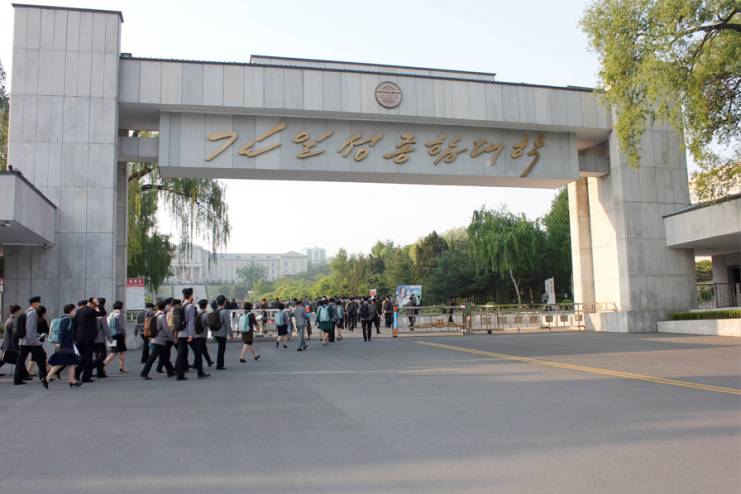
North Korean authorities are investigating academic fraud at Kim Il Sung University after discovering doctoral graduates falsely listed professors as thesis advisors who provided no actual guidance.
The Central Committee’s education department launched the probe after a graduate complained about unfair job placement advantages gained through the deceptive practice.
“The practice of falsely listing academic advisors on theses was exposed and reported to the Central Committee’s education department after a Kim Il Sung University doctoral graduate complained about being disadvantaged during job placement following their thesis review this spring,” a source in Pyongyang told Daily NK on Wednesday. “The education department has been conducting a month-long inspection since early this month.”
Since Kim Il Sung University doctoral theses directly affect job placements, academic advisors hold significant influence. Some graduates add names of famous professors as co-advisors even when they provided no guidance, or include research lab or company officials to both enhance their academic credentials and secure connections, the source said.
After a classmate received a better job placement despite writing a weaker thesis, one doctoral graduate formally complained that the classmate had falsely listed a particular professor as their academic advisor. This prompted the party’s education department to launch its investigation.
The education department appears determined to end the practice of students adding names of uninvolved professors or officials to their doctoral theses for better employment prospects.
Investigation expands to five years of theses
According to the source, the party’s education department considers this a serious case of academic fraud that perverts the job placement process. It is now investigating and reviewing all doctoral theses written by Kim Il Sung University students over the past five years.
The education department is increasingly concerned about potentially significant negative consequences, given that falsely including uninvolved academic advisors not only damages academic credibility but also distorts merit-based job placements.
“The current investigation could expand since this case goes beyond violating academic ethics to damaging public faith in the party’s emphasis on cultivating talent,” the source said. “The education department seems truly intent on correcting this injustice, which has become an established practice.”
“Some professors and doctoral graduates could face party punishments or career damage depending on investigation results. Meanwhile, measures are being discussed to address weaknesses by specifying and requiring verification systems, including attaching supporting evidence when academic advisors add their names to theses,” the source added.
Kim Il Sung University is reportedly cooperating fully with the education department’s investigation. Even within the university, voices of self-reflection have emerged calling for correcting problematic practices and restoring faith in education. They see this incident—which has shaken both the university’s prestige as North Korea’s top higher education institution and the fairness of the country’s employment process—as an opportunity.
“One Kim Il Sung University official said this incident shouldn’t end with just criticism and punishments, but should lead to creating systematic measures to break the cronyism tied to academic theses so they can be evaluated transparently,” the source said. “He said only then can faith in education be restored and true talent can serve the state.”