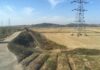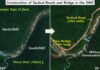

Hydroelectric power stations built along tributaries of the Yalu River suffered varying degrees of harm during last summer’s record floods, with some facilities being swept away or damaged. Recent analysis of satellite photos showed that Hungju Youth Power Station and the Yonha Power Station, built in the basin of the Jangja River in Jagang province, have yet to recover from damage suffered from torrential rains and flood currents.
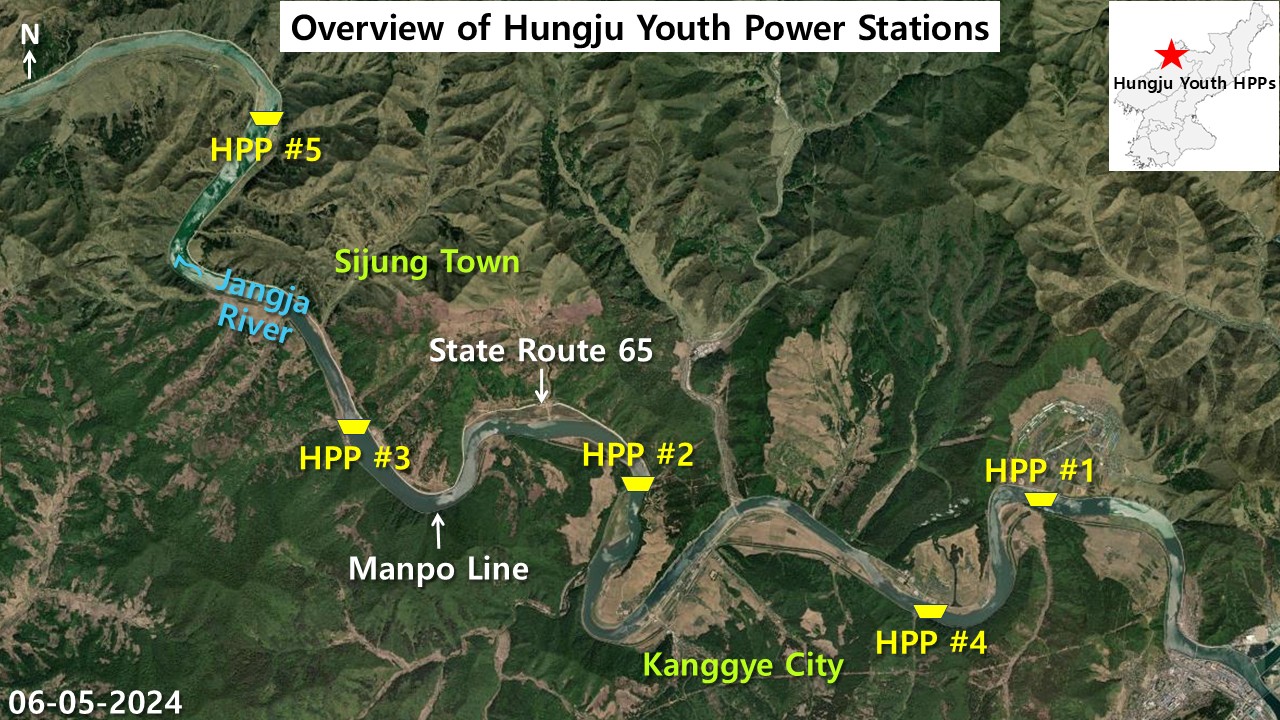
The Jangja River flows through Jagang province. It is a tributary of the Yalu River, flowing into the Yalu through the city of Kanggye and the hamlet of Sijung. The Hungju Youth Power Station consists of five dams, arranged along the river like a terrace. The five dams were built over 13 years — construction on the first began in 2010, while work on the fifth ended on June 30, 2023. In the photo above, National Road 65 snakes above the river, while below the river runs the Manpo railway line, which connects Sunchon, South Pyongan province, and Manpo, Jagang province.
This power station in the basin of the Jangja River suffered damage in last summer’s floods, with some facilities swept away. Radio Free Asia reported late last year that torrential rains and rapids had damaged Hungju Youth Power Station’s Unit No. 4 and swept away some facilities, with power generation suspended as a result. Analysis of recent satellite images shows that Hungju Youth Power Station’s Unit No. 4 has yet to be restored and remains abandoned.
Hungju Youth Power Station’s damaged 4th unit abandoned
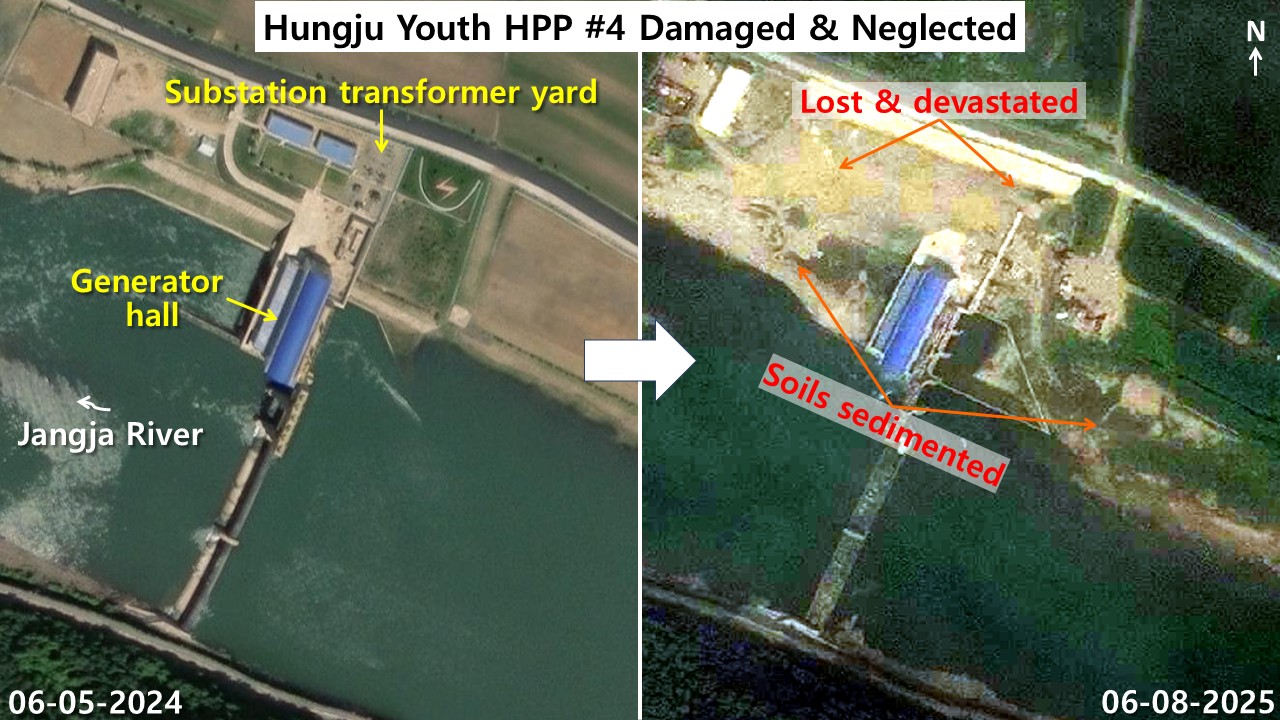
Last summer’s flood waters swept away Unit 4 of Hungju Youth Power Station’s substation, as well as support and management facilities. In their place remains derelict land covered in river sediment. Large sandbars have also developed in front of and behind the turbine room. With the river water unable to flow and spin the turbine, the facility cannot generate power. Unit 4 of Hungju Youth Power Station has remained inoperable and abandoned for over a year.
Yonha Power Station left flooded after levees break
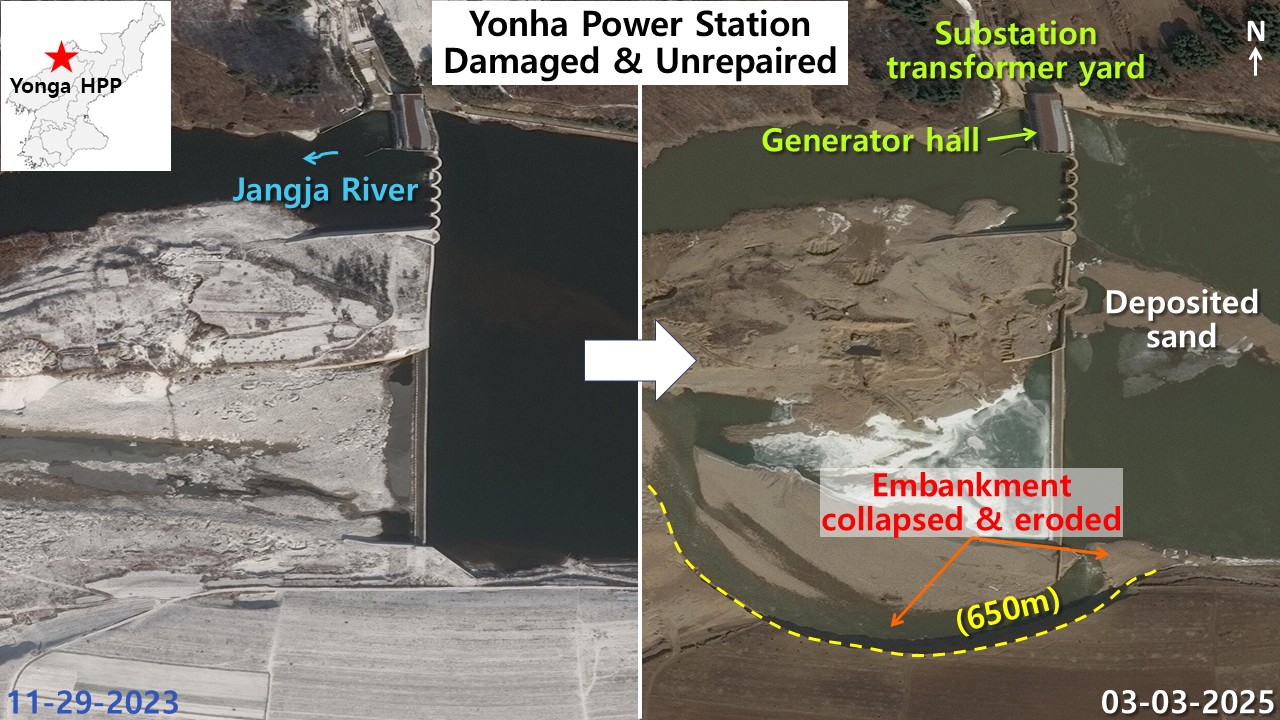
At the Yonha Power Station, located in the Jangja River basin in Manpo, Jangang province, levees broke in last summer’s floods. Fast-moving water swept past the broken levees, flooding the riverside and washing out the ground. Sediment accumulated in the middle of the river, near the center of the dam to the right. The river grew shallower, revealing the riverbed’s sand. The water level of the Jangja River has lowered significantly, rendering power generation less efficient. Last year’s flood damage has yet to be repaired.
North Korea remains about 62 to 63% dependent on hydroelectric power. In contrast, South Korea depends 60% on fossil fuels like coal and LNG, 30% on nuclear power and about 10% on renewables like solar, bio, wind and hydroelectric power. Hydroelectric power accounts for just 0.33% of South Korea’s total power generation.
North Korea’s reliance on hydroelectric power stems directly from its ideology of self-reliance. International sanctions restricting oil imports forced Pyongyang to pursue energy independence through domestic resources. The country’s mountainous terrain and abundant rivers provide ideal conditions for hydroelectric development, making it a natural strategic choice aligned with North Korea’s self-sufficiency goals.
Small hydroelectric stations offer particular advantages: they are relatively inexpensive and can be constructed quickly. This has led North Korea to shift from large-scale dam projects toward a distributed network of smaller facilities.
However, this heavy dependence on hydroelectric power creates significant vulnerabilities. The energy source is inherently unstable—rivers freeze during harsh winters, while climate change brings droughts and extreme temperatures that disrupt generation. Technical problems further compound these challenges.
Despite these limitations, North Korea has few alternatives given its international isolation. The country continues expanding its hydroelectric infrastructure as the most viable path toward energy self-sufficiency, even as it grapples with the inherent instability of this approach.