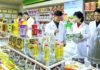


North Korean authorities distributed wheat flour imported from Russia to government agencies, army units, mines and other state institutions in Hamhung, South Hamgyong province ahead of Kim Jong Il’s birthday on Feb. 16, though many people say the state should be prioritizing rice over flour.
According to a Daily NK source in South Hamgyong province, who requested anonymity for security reasons, rumors that North Korea had imported large amounts of Russian flour had recently spread in Hamhung. In line with this, authorities distributed flour ahead of the late leader’s birthday to party committees, security and police agencies, army units and mines.
An order was also issued to distribute flour to neighborhood watch units, though a specific date has not yet been set. Public anticipation is growing in response.
“With some agencies actually receiving flour provisions and neighborhood watch units reportedly set to receive them after recent rumors about flour imports, people welcome the news, with their worries about food eased a bit,” the source said.
However, some people complain that powerful agencies “have never worried about putting food on the table, yet they always receive priority provisions,” and that they wish “ordinary families received provisions first in times like these.”
Others say Korean people “can work only when they eat rice” and that it would be “far better to import rice rather than flour.”
Rations fall short of people’s needs
Limited provision volumes are fueling these responses. People at powerful agencies, army units and coal mines received an average of 5 kilograms (11 pounds) of flour.
“If you receive enough to feed your family, nobody would turn down provisions of flour, regardless of whether they exchange it for rice or consume it themselves,” the source said. “Five kilograms is enough for donuts or fritters for a couple of days, but even these are special foods for occasional consumption. You can’t eat them every day. So the joy at receiving flour is brief, and people express a desire for rice.”
During a policy speech at the Fifth Meeting of the 14th Supreme People’s Assembly in September 2019, North Korean leader Kim Jong Un stressed the need to ensure that people have “polished rice and flour, and thus provide them with the condition for improving their diet in a cultured way.” Later that year, at the Fourth Plenary Meeting of the Eighth Central Committee in December, Kim called for policies to shift the country’s dietary structure in favor of wheat, urging “ways to orient the agricultural production of the country to replacing the people’s culture of diet by that with the main stress on polished rice and flour foods.”
Policies to shift the country’s diet toward wheat align with Pyongyang’s foreign policy strategy of drawing close to Russia. However, as there are limits to replacing the country’s rice- and corn-focused dietary culture, which has taken root over decades, people point out that a large gap persists between the authorities’ policies and reality.
“Above all else, what is most urgent right now is stabilizing people’s day-to-day food supply,” the source said. “The state is doing lots of things ostensibly to improve lives, but the most important problem people face — food — has yet to improve.”
Some people say that much of the flour recently imported from Russia is intended to supply food factories rather than for public distribution.
“There’s a rumor that the country imported flour from Russia for gifts on Feb. 16 and April 15,” the source said. “Many people also say that the state aims to boost revenue by selling snacks and bread products.”
NK News, quoting a press release by Russia’s federal veterinary customs authorities, reported on Jan. 27 that 540 tons (595 short tons) of flour produced in Novokuznetsk in Russia’s Kuzbass region was shipped to North Korea after undergoing quality control checks on Jan. 3, 19 and 20.
Reporting from inside North Korea
Daily NK operates networks of sources inside North Korea who document events in real-time and transmit information through secure channels. Unlike reporting based on state media, satellite imagery, or defector accounts from years past, our journalism comes directly from people currently living under the regime. We verify reports through multiple independent sources and cross-reference details before publication.
Our sources remain anonymous because contact with foreign media is treated as a capital offense in North Korea — discovery means imprisonment or execution. This network-based approach allows Daily NK to report on developments other outlets cannot access: market trends, policy implementation, public sentiment, and daily realities that never appear in official narratives.
Maintaining these secure communication channels and protecting source identities requires specialized protocols and constant vigilance. Daily NK serves as a bridge between North Koreans and the outside world, documenting what’s happening inside one of the world’s most closed societies.