

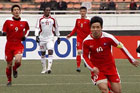
One of the more prosaic punishments North Korea might incur if it is proven definitively that Pyongyang was responsible for sinking the Cheonan in late March is to see its access to TV coverage of next month’s World Cup circumscribed by the South Korean provider with exclusive rights to the tournament on the Korean Peninsula, SBS.
North Korea may still be a society into which limited amounts of information can percolate, but it is not immune to football fever. North Koreans are still living off memories of 1966, when their team overcame footballing giants Italy to reach the quarter finals and captured the hearts of the people of England along the way, and still smarting from 2002, when the South Korean team went one better to reach the semi-finals and steal the mantle of Asia’s highest ever finisher in the tournament.
As the provider of World Cup coverage to the entire Korean Peninsula, SBS has been in negotiations to provide it to the North. As part of the deal, SBS is demanding that Pyongyang allow it to cover the way fans in the North react to the tournament, something which the North is unwilling to permit.
Furthermore, exporting anything from South to North requires the approval of the Ministry of Unification in Seoul, and it is as yet unclear whether such permission would be granted without condition.
According to the Korea Times, the Ministry of Unification is in no mood for charity. “In view of the North’s recent provocative postures against the South, it is the government position that the North must pay an appropriate price to SBS for the broadcast rights under internationally accepted norms,” a Ministry official told reporters yesterday, adding, “We did not ask the North to make nuclear bombs or be belligerent.”
Being unable to see any of the coverage would apparently not go down well at all with the people of North Korea who have waited 44 years for their team to reach the finals for a second time. One defector, Park Sang Hak told the Financial Times today, “If there is a power cut during the World Cup, people start yelling at the screen and criticizing the authorities. There could be trouble if they don’t broadcast it at all.”







