

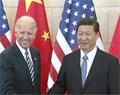
Chinese Vice President and incoming leader Xi Jinping arrived in the United States yesterday to meet with American politicians and discuss pending issues concerning the two countries, an agenda which is likely to including Korean Peninsula relations.
He is scheduled to meet first with President Obama in Washington today, before meeting with other high level officials including opposite number Joe Biden and Secretary of State Hillary Clinton.
It is expected that both sides will reaffirm their existing commitments to cooperate on resolving the North Korean nuclear issue and working towards peace on the Korean Peninsula. The Chinese delegation will continue putting emphasis on an early restart to the Six-Party Talks and dialogue, while the US will highlight the importance of the need for improvement in inter-Korean relations first as well as a more accountable position from China on North Korean provocations.
Dr Michael Green, a former Senior Director for Asian Affairs on the National Security Council, now the Japan Chair at the Center for Strategic and International Studies, commented ahead of the visit, “The main message from Xi will be: Return to the Six-Party Talks; get dialogue going. The (U.S.) administration is not opposed to engagement with the North and some dialogue, some discussions, but is deeply and rightly skeptical that the North Koreans will do any serious discussions about nuclear issues. And I suspect that […] they’ll be talking at cross purposes on that one.”
In essence, while the U.S. and China agree on the need for stability on the Korean Peninsula, their opposing stances on how it is best achieved make it unlikely that any new headway will be made.
Indeed, commenting on the meetings in Washington, DC, Lee Tae Hwan of the Sejong Institute said, “They won’t discuss things like North Korea’s nuclear programs or the Kim Jong Eun system publicly at all. They will confirm that which they are able to confirm together, but finding new areas for compromise won’t be easy.”
“They will give the impression to the international community that they are going to cooperate developmentally on the Korean Peninsula issue, but the only intent displayed will be to maintain the stability of circumstances on the peninsula itself,” Lee continued.
This tendency will be exacerbated by the fact that Xi’s visit is happening, Lee said, “to prove to the domestic Chinese audience that he can handle the whole range of issues from politics, the economy and diplomacy, including the Korean Peninsula, while also receiving support from the United States,” making it more for show than for the manufacturing of progress.







