
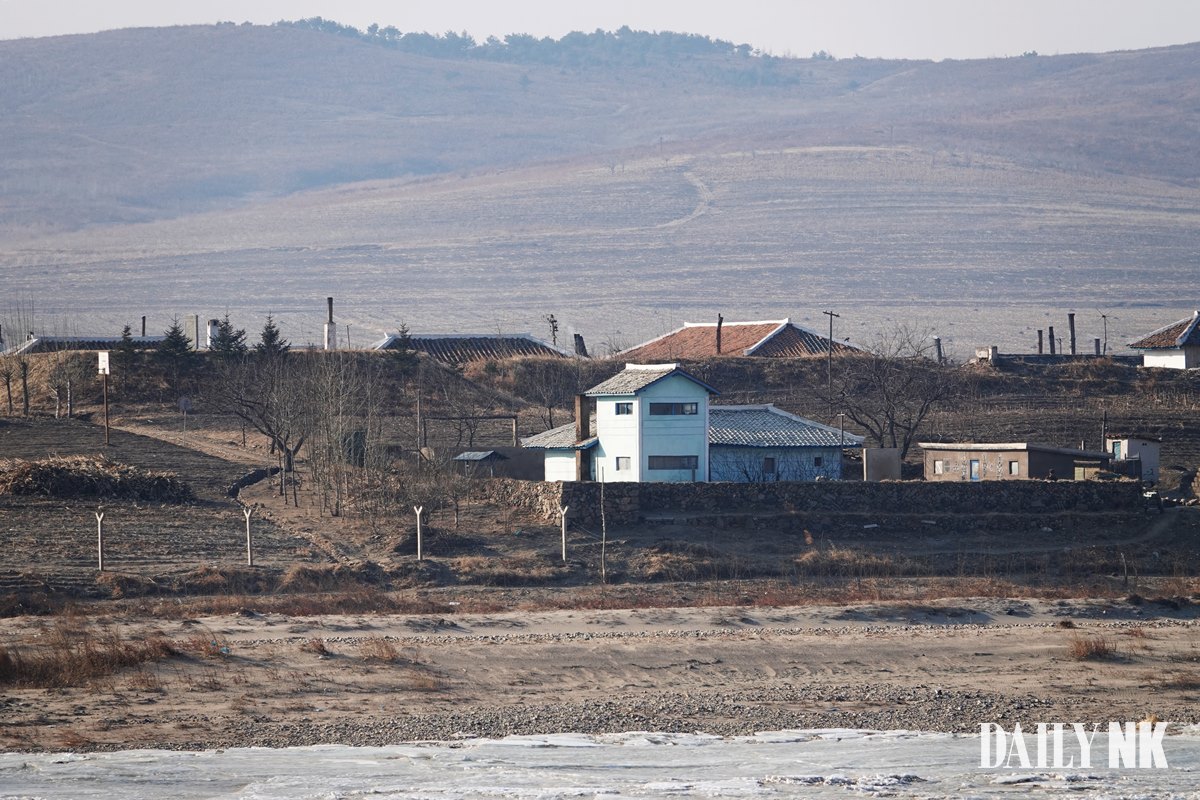
A North Korean woman in her 40s who was caught using an illegal Chinese mobile phone in Kimjongsuk County, Yanggang Province, was sent to a concentration camp for political prisoners in early December.
“A woman in Kimjongsuk County was sent to a [political] prison camp on Dec. 5. She was transferred there six months after being arrested by the Ministry of State Security for using a Chinese mobile phone back in June,” a source in Yanggang Province told Daily NK last Tuesday.
According to the source, the woman, surnamed Choi, had been engaged in moving goods between China and North Korea before the COVID-19 pandemic. After the North Korean authorities completely closed the border after the outbreak of the disease, Choi turned to handling remittances as a way of making a living.
Choi was caught using a Chinese mobile phone on the job and was arrested and questioned by the Ministry of State Security several times. Last year, she was brought in no fewer than three times and subjected to harsh interrogations. But each time, she gave a large bribe to secure her release and continued working as a remittance broker.
Then in June, Choi was arrested once more by the Ministry of State Security while delivering money to the families of defectors. Since it was her fourth arrest, she needed to pay an even larger bribe. But this time, she didn’t have any money and was eventually sent to a political prison camp, the source said.
“Use of Chinese mobile phones is being treated as espionage since the start of the pandemic, so the amount one needs to pay in bribes has skyrocketed. Anyone who is caught needs a bribe of at least RMB 50,000 [around USD 7,100]. The severity of the crime is now determined by how much money people can cough up,” the source said.
The incident shows that corruption at North Korea’s law enforcement organizations has been getting worse as the economic situation in the country deteriorates.
After her arrest, Choi was transferred from the county office of the Ministry of State Security to the provincial branch to be questioned about the amount and the recipients of the remittances she had handled over the past two years. She was also interrogated about whether she provided contacts outside the country with any information about North Korea.
The investigators learned that Choi had delivered money to some 80 relatives of defectors over the past two years, the source said.
The interrogation was so harsh that Choi ended up admitting to things she had not done. Under torture, she confessed to charges that she had leaked internal information to the outside world.
“As the Ministry of State Security seeks to boost its figures for the year, it’s locking people up for good — even people that agents had let off the hook in exchange for bribes in the past. They’re apparently trying to create an atmosphere of terror by showing that people who are caught using Chinese mobile phones can be sent to a concentration camp at any time,” the source said.
“The current reality today is that even when you’re conspiring with high-ranking officials, lawbreakers will ultimately be turned into scapegoats when they run out of money,” he added.
Please direct any comments or questions about this article to dailynkenglish@uni-media.net.