
The number of prisoners at North Korea’s notorious political prison camps has reportedly skyrocketed as of late. A source says North Korea has recently been dragging off to the camps people who criticize the country’s COVID-19 quarantine policies.
A source in North Korea told Daily NK on Monday that the number of inmates has recently climbed at political prison camps in Pyongsan, Bukchang, Hwasong, and Kaechon. He said the inmate population at the camps climbed by about 18,400 individuals between last October and late March.
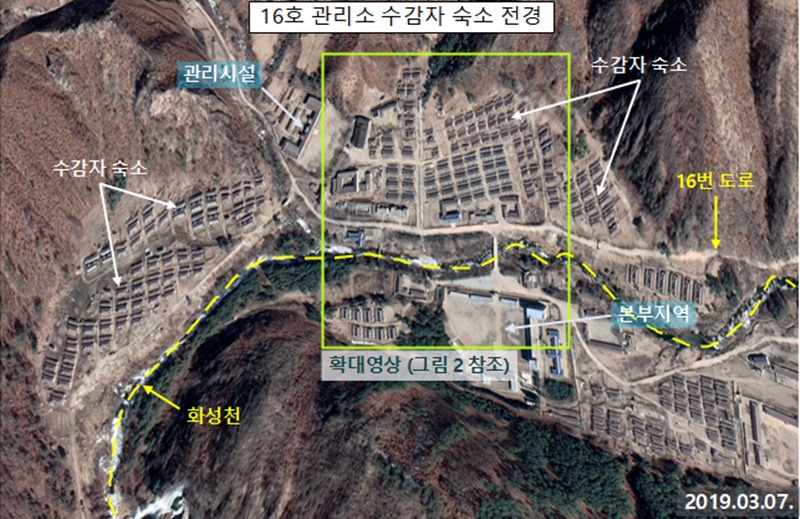
According to the source, the inmate population climbed by about 8,000 in Kaechon (Camp 17), 4,100 in Bukchang (Camp 18), 2,700 in Hwasong (Camp 16), and 3,600 in Pyongsan.
According to a Daily NK investigation, there were an estimated 230,000 people in North Korea’s political prison camps as of last July. While people were lined up to enter the camps from August to November as well, there was a spike in deaths among the existing inmates, so the inmate population changed little.
However, the inmate population climbed significantly between the fourth quarter of last year and the first quarter of this year. Unlike before, when most people who broke quarantine rules were imprisoned, there are more cases of people being locked up for criticizing COVID-19 quarantine policies.
The source said at the beginning of the pandemic, the authorities sent everyone who violated quarantine rules to political prison camps, while from the mid-part of the pandemic, it dragged off to the camps “quarantine violators,” which is to say, people who violated their home isolation or quarantine facility rules.
These days, however, in addition to these two groups, the authorities are arresting people who criticize state policy in regards to COVID-19, people who speak or act in a politically ambiguous way, and people who impede the implementation of disease-control policies, the source said.
He said if people misspeak and criticize North Korea’s failure to adopt vaccines, comparing the situation to other countries, the authorities make an example of all of them by punishing them as spies. “While the government considers COVID-19 less of a problem than before, this has freed it up to focus more on silencing people to prevent rumors from spreading,” he added.
Meanwhile, North Korea is intensifying its crackdowns on and punishments of “anti-socialist and non-socialist behavior,” which it regards as a serious threat to the regime. Accordingly, more locals are being locked up in political prison camps for this kind of behavior.
North Korea enacted a law to eradicate “reactionary thought and culture” in late 2020 that punishes the importation and distribution of material from the outside world. And last July, it enacted a law on youth education that targeted a younger generation influenced by “capitalist culture.”
In fact, North Korea organized a “unified command on non-socialist and anti-socialist behavior,” the so-called “Unified Command 82,” which has been engaging in intensive nationwide crackdowns. In particular, it has been engaged in a merciless crackdown in border regions of North Pyongan Province, Yanggang Province, and North Hamgyong Province that is close to what one could call a “war of extermination.”
The source said more people are heading to political prison camps with the recent creation of new criminal laws or the proliferation of bylaws and regulations attached to existing criminal laws. “There are many political prisoners who have been caught up in the all-out campaign [against Chinese cellphone users] in the four major cities along the border, the campaign against anti-socialist or non-socialist behavior, and [violators of] COVID-19 [rules].”
The source claimed that people caught engaging in anti-socialist or non-socialist behavior are made political prisoners, no questions asked. He added that people who illegally talk with “enemies” or the outside world using foreign-made mobile phones are treated as spies, regardless of the reason, if a comprehensive investigation of their testimony and behavior turns up serious problems.
Translated by David Black. Edited by Robert Lauler.
Please direct any comments or questions about this article to dailynkenglish@uni-media.net.