

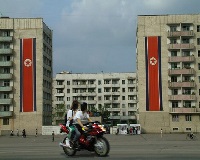
Motorcycles, once a symbol of privilege for a North Korean man, are becoming an indispensable tool in the
growth of the country’s market economy.
Speaking with Daily NK on the 29th about the dynamic process
of North Korea’s marketization, a Sinuiju source commented, “Motorcycles are
being used to facilitate the circulation of goods, and are one thing a lot of men
particularly want to own.”
“A motorcycle used to represent a man’s wealth, power, and
style,” the source recalled. “But these days it’s just a way of making a
living. Although the authorities control and regulate them, the
number of people riding motorcycles keeps growing.”
According to sources, the North Korean authorities subcategorize motorcycles into small, scooter-type (125cc or less), mid-size (up to 250cc)
and large (up to 400cc). The preferred type among today’s market participants is
of the second type. Overwhelmingly Chinese in origin, these sell new for
$900-$1000, but second-hand ones can be obtained for $700 or less depending on
condition.
Corruption is prevalent in North Korea, and as a result
bribery is required to obtain a license and registration plate from
the Traffic Division of the Ministry of People’s Security. Another common route
is to buy fake documentation; this is often cheaper than bribing the relevant
gatekeepers. A driving test for motorcycles also exists, the source explained,
but this is rarely enforced, especially in provincial areas.
As is the case for so-called “quick service” providers in
South Korea and other motorcycle-based delivery systems worldwide, motorcycles
allow for rapid movement of goods and services between and within markets in
North Korea. Compared with trains, buses, and even private cars, they also make
it easier to evade patrols and checks, and to travel at night.
“Wives are buying their husbands motorcycles because they now believe
‘time is money,’” the source explained. “And where once the men might have ridden
them rather ostentatiously, now they know the joy of earning money and are
actively using them to take part in market activities.”
This trend indicates a new shift in the concept of the
“husband.” Since the beginning of the marketization period in the 1990s,
responsibility for making money has fallen predominantly on women, who were not
prohibited from participating in market activities. This led to the declining
authority of men in many cases. However, with the increasing role of men in the
market structure in the last few years, this has begun to shift once more.









