

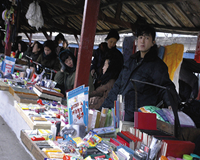
The number of stalls within North Korea’s
expansive system of markets has rapidly increased since 2012, based on figures
reported from Daily NK’s sources inside the country. Over the past three years,
the state has granted permission for a vast number of stalls in order to
increase “stall fees” collected
from such establishments, according to data collected from these informants.
“The number of stalls in Hyesan Market has
jumped significantly compared to three years ago,” one
source based in Yangkang Province said. “The growth in
those numbers is reflected in the money flowing into the coffers of the
Provincial People’s Committee commerce department, so the state is reaping in benefits from individual vendors.”
“In the case of the farmers’ market in Hyesan, there were some 3,600 stalls as of late 2012.
Currently, however, this number has jumped to approximately 4,000–almost 500
more than before,” she said. “They reduced the number of stalls for kitchen appliances and less
popular products and created more for goods in high demand.”
At Yeonbong Market, also in Hyesan City,
the number of stalls stood at 755 in December 2012; at present, there are
roughly 1,047 stalls. Moreover, at Wiyeon Market, the 879 stalls jumped to 1,124, and at Yeonpung Market, from 392 to 744.
A separate source in Yangkang Province
reported a similar trend but on a smaller scale. “Most markets in Hyesan saw large-scale expansion, but Masan Market
situated near Hyesan Mine has seen a more marginal increase, from 700 stalls in
2011 to 712 currently,” he said. “The number of vendors has gone from 350 (in 2012) to 405 at the
moment.”
The explanation for the relatively small
increment is that miners in the area receive rations, along with rice, oil, flour, etc. thrown in as a substitute for full wages, which reduces demand at the markets compared to other areas, according to the same source.
A source in South Hamkyung Province
reported that stalls have increased in Bukchong Market as well. The most marked
jump was observed in rice stalls, which are in great number and separated from
other booth; the number of rice vendors has increased to 350. North Hamkyung
Province’s Sunam Market–located in Chongjin– is said
to have surged by the thousands, with booths reaching roughly 12,000.
In the case of Gangwon Province, Wonsan
Market has seen the number of vendors blossom, now hitting roughly 5,700 from
3,000 or 4,000 in the past.
All sources reported that while the number of
stalls has multiplied as a result of the authorities granting people more freedom to
partake in a form of market economy, the motive behind the move is far less benevolent, but very predictable: the state needs to increase its own revenue through the stall fees collected. Still, all sources agreed that motivating reasons notwithstanding, the move is a positive step forward for the
greater number of people able to sell goods.
“Some people have reported the amount
collected daily from Hyesan’s market for farmers
reaches more than 4 million KPW [500 USD].This means over a month they would make more
than 100 million KPW [12,500 USD].There are five markets in Hyesan City, so if they’re making some 100 millions, it’s easy to
understand why the state is allowing all these markets to operate,” the source in Yangkang Province reported.
However, a number of the sources reported
that some vendors are exposed during crackdowns selling products from South
Korea and lose their stalls. These are then sold to other vendors, and the
prices range from 1.5 million KPW [188 USD] for a stall 1 meter in length, to 4 million KPW [500 USD] for a space 2.5 meters long.
According to figures reported from sources,
stalls that sell electronics and pricey goods call for a daily market fee of
1,500 KPW [0.19 USD], while small booths for food require a 500 KPW [0.06 USD] fee. Market-selling fees
also vary depending on the size and products sold at the stalls.









