

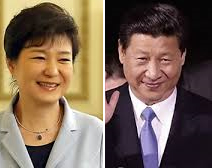
Today sees the long-awaited China-South Korea summit in Beijing, an event at which discussion of North Korea is certain to predominate. Given the breakdown of talks between North and South Korea on June 11th, the summit between presidents Xi Jinping and Park Geun Hye is widely regarded as the next best hope for reviving dialogue on the Korean Peninsula in the medium term.
Following those failed talks with South Korea earlier in the month, North Korea immediately proposed bilateral talks with the U.S. However, once the U.S. had responded in the anticipated lukewarm style, reminding North Korea that it ought to deal with its obligations first, chief North Korean nuclear negotiator Kim Kye Gwan traveled to China, where he pushed relentlessly forward with North Korea’s strategy, declaring, “We welcome all kinds of dialogue, including the Six-Party Talks.”
However, with the U.S. and South Korea in lockstep on the point that North Korea needs to act on its denuclearization commitments rather than talking about it, the general suspicion is that bilateral talks, and indeed the Six-Party Talks, will not come easily.
Nevertheless, China is seen as the only country that can place direct pressure on North Korea in the current climate. As such, whether the summit statement that emerges later today contains a Chinese statement about bringing North Korea to the negotiating table could, in theory at least, have a considerable influence on North Korea’s own next move.







