

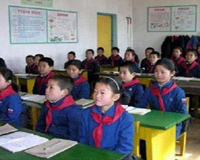
Elementary school students have been
enjoying an increase in hands-on learning in the classroom following the
implementation of the 12-year mandatory education program in 2013. A large number of hires from the general public has been brought in to fill expanding gaps in the workforce after trained teachers were stretched too thin to cover the extra year of education mandated under the ordinance. Public hires have been conducting more practical activities and offering lessons popular with students and their parents, to which overall responses have been overwhelmingly positive.
“Starting last year, class times changed a
bit along with the method of teaching. Before classes were based mostly on
teaching theories, but now it’s more based on hands-on activities
and implementation,” a source in Yangkang Province told
Daily NK on Tuesday. “Even though the system has
changed a lot, students are showing changes in their attitude and parents are
happy as well.”
The decision to extend mandatory education
to 12 years bolstered students’ elementary studies with another year, but faced with an extreme shortage of certified
teachers in provincial areas, schools began taking on residents in the region to occupy the roles. These recruited residents, however, unaccustomed to textbook-style lectures prevalent in North Korean schools, have been opting to conduct classes that offer students firsthand
experience instead.
“The new teachers do not have enough
training in their studies, so they’ve started teaching
using whatever knowledge they have from everyday life,”
the source said. “Classes offered by teachers from the
working class have received good feedback, which in turn got reported to the Education
Commission; this eventually led to schools nationwide conducting more classes
based on experiments and hands-on learning.”
Most classes wrap up in the morning, with afternoon hours allotted for other activities specific to the interests of
individual students, enhancing results and overall efficacy, according to the
source.
“In the past, the only classes with
hands-on experience or field trips were biology or home economics (for women)
and automobile studies (for men), which were both limited to one to two hours.
Now, there are not only more subjects but extended hours,” she explained. For example, she added, in the case of chemistry, students only had access
to experiments roughly once a semester, but now that they are offered more frequently students are learning more, faster.
Computers have also seen a rapid proliferation
among schools–institutions previously housing only one machine are now equipped with at least ten, all applied to a range of subject matters. “In the
past, for physical education, the most students did was play soccer, volleyball or basketball outdoors. But now they are shown skills and training ideas
exhibited by other athletes on the computer to give students a better
idea,” she explained. Art class was another space she mentioned computers have seen increased application.
“Putting what they’ve
learned into practice has helped many students feel more confident and they
often engage in intense debates about their experiences,” she said. Unfortunately, despite these gains, she conceded that class materials
for any subject remain strictly centered around the idolization of Kim Il Sung and Kim Jong Il
and their activities. Only time will tell if addressing these prevailing problems will come about independent of the recent changes, or far more likely, the recent modifications can contribute to an overall, gradual shift.









