

The North Korean authorities are promoting the idea that last year’s good
harvest was down to the leadership of Kim Jong Eun as they seek to drive
production of organic fertilizer for coming years.
In a lecture for members of the Chosun Union of Democratic Women, a source from
North Hamkyung Province told Daily NK on the 18th, “They said that
the good farming of last year was the result of putting lots of humus on the fields, and that this was done in accordance with the instructions of the Marshal.”
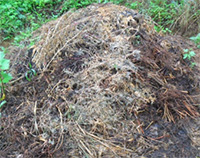
The fertilizer in question consists of grass, which is cut in summer and then composted for use the following year. In North Korea the ordinary production period runs from mid-July to the end of August. The country is reliant on organic fertilization, including the application of night soil, because of chronic shortages of chemical fertilizer
production capacity. Early encouragement to get the process of gathering grass underway may also imply that North Korea does not intend to use its scarce hard currency reserves on importing fertilizer from China, and does not anticipate receiving large scale fertilizer aid this year.
“Last year it was a ton per member (of the Union), but this year we have
been set the target of 1.2 tons” the source went on to convey, adding, “Areas
of grass get smaller every year but the work of getting grass from it gets
bigger.”
The project is a source of predictable consternation. “If they
start getting picky about meeting the target then grass thieves are
going to appear, just like compost (made in part from night soil) thieves appeared
at the start of this year,” the source warned.
It is not only urban areas of North Korea that lack grassy areas; in rural regions most areas of ground are cultivated, and grassy regions that do exist are in use to graze cows, sheep, and goats. The
strongest grasses, which do not compost very well in any case, are used for
firewood.
“Obviously if you were going to reach the target you’d have to go and get the
grass from deep in the mountains or some other uninhabited region,” the source
asserted. “Some women will deal with it by paying out ‘economic funds’.” This means money paid to exempt oneself from labor mobilization; it
costs approximately 15,000 North Korean Won to avoid participation in a project
of this nature.









