

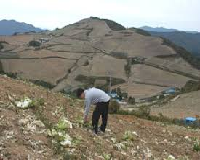
Facing the kimjang (making of kimchi)
season, prices of ingredients such as garlic, green onions, chili peppers, and
salt — all used to make kimchi — have skyrocketed, adding to the burden of
households in the North, Daily NK has learned.
“In the provinces of North and South
Hamgyong, the vegetable ‘harvest battle’ takes place from today until the 5th,”
a source from North Hamgyong Province told Daily NK on November 3. “For around
two days we will wrap up the fall cabbage ‘harvest battle’ and then move on to
radish harvests five days later.”
A source in South Hamgyong Province
verified this news.
Due to the nationwide drought and damage
caused by the subsequent monsoon, most collective farms will likely fail to produce
half of their average harvest for vegetables, the source speculated. State-run
enterprises are carrying out cabbage harvests at designated collective farms, but
as it’s becoming increasingly evident that the amount allocated to residents
will fall much behind last year’s, people are getting concerned.
“At Chongjin’s Sunam Market, 1 kg of
cabbage now goes for 3,000 KPW (0.35 USD), which is up 1,000 KPW (0.12 USD) from before. Radish
prices have climbed by 500 KPW (0.06 USD) to 2,000 KPW (0.23 USD), but despite the higher prices,
they’re still selling at a rapid pace,” the source said. “Even if people see
someone with radishes and cabbages on an ox cart going by, a lot of them will
chase after it and try to buy the produce off of the person for high prices,
creating a scene.”
With kimjang season right around the
corner, market prices for radishes and cabbages are escalating, and even
ingredients like chili peppers and garlic that are used for seasoning are on
the rise as well, adding to people’s troubles. Around this time last year,
cabbages and radishes would be commonplace at the market, but now they’re a
rarity, the source emphasized.
“Back in August, a lot of vegetable fields
in the Hamgyong Provinces and parts of Yanggang were lost to extreme downpours,” she explained, ” so a lot of households are giving up on kimjang for the year.”
Added the source, “The vast majority of vegetable fields on collective farms and individual plots
have been reduced to empty lands full of sand, or you’ll occasionally catch
bits of cabbage outer leaves and bottoms here and there.”
Despite this shortage, central authorities
have ordered prioritized supply for the Rason area, which was particularly hit
hard by devastatingly torrential rains, meaning some regions are not seeing a
single head of cabbage being sent elsewhere. Farmers who find themselves having
to prioritize supplies for neighboring military bases and areas that saw flood
damage are worried about procuring their kimjang supplies.
For an average four-person family, a
minimum 350 kg of cabbages and 200 kg of radishes are required to do kimjang.
The fermented cabbage dish also requires 3 kg of garlic and 18 kg of salt to
make in bulk. For winter kimjang, it would cost roughly 1.5 million KPW (174 USD), but
the source put this year’s estimated cost at 3 million KPW (348 USD), adding that even
with this money it is hard to secure the right supplies.
Being so reliant on kimchi, people from
average households are already worried about going hungry in the upcoming
months, and the shortage has also stirred up some criticism about the Party’s
agricultural policies, according to the source.









