

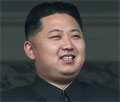
With Kim Jong Il’s death, Kim Jong Eun’s rule begins. His first public appearance as leader was yesterday, he accompanied senior cadres, political and military officials to Keumsusan Memorial Palace where his father Kim Jong Il’s body is lying in state.
Kim’s ability to rule will be revealed, domestically and abroad, during national events such as January 1st (New Year’s joint statement), February 16th (Kim Jong Il’s birthday) and April 15th (Kim Il Sung’s birthday).
But as Kim Jong Eun’s leadership begins with anxiety sounding his succession, however, Kim Jong Il’s absence does not have to mean that Kim Jong Eun’s succession will be threatened. He will utilize the autocratic system that has been built by his father over the past 37 years and expedite the work of the ‘Power Transition’, by controlling the Cadres and monopolizing the power structure.
Kim Jong Eun has already been officially ascended as Kim’s Jong Il’s successor through last year’s Chosun Workers’ Party Delegates Conference and is suspected to have already received oaths of allegiance from top Cadres. After Kim Jong Il’s stroke in 2008, it is possible that Kim Jong Eun have expedited the process of building his new regime.
It is too early to judge whether or not Kim Jong Eun has fully taken over both the Party and the Military. Power elites will remain skeptical about the inexperience of late 20s Kim Jong Eun, unless and until he exercises power to stabilize the country.
If Kim Jong Eun’s decision making creates confusion, it will destabilize the power structure. It is predicted that Kim Jong Eun will appease the concerns of the power elites while at the same time solidifying his control of the party and military by intensifying the control systems therein.
“Considering the fact that the power elites in both the Party and the Military will not show much loyalty, Kim Jong Eun will try to divide them”, Park Hyung-jung a Senior Research fellow at Korea Institute for National Unification, said in a phone interview with DailyNK.
He went on to say that “If the National Security Defense, People’s Safety Agency, General Staff Department and the General Political Department unite, there is a larger possibility of resistance. Thus, it seems likely that Kim Jon Eun will build a mechanism to separated these Departments.”
Professor Kim Yeon Soo of National Defense University said, “Kim Jong Eun’s power relies heavily on the Party’s Military Commission and the National Defense Committee and what is of interest is when and how quickly the reshuffle will happen.”
In the case of Kim Jong Il, he became the Party’s General Secretary after the death of the former leader Kim-Il Sung in 1997 by completing the ‘(Yu-Hoon) governing instructions’. But, Kim Jong Eun who needs to affirm his legitimacy, may decide to take the position of General Secretary, Supreme Commander or as the Leader of North Korea within a shorter period of time.
First, using his status in the military, Kim Jong Eun will be inducted as the leader of the Supreme People’s Assembly in April and will be promoted as General Secretary either before or after following regular process at the October Party Foundation Day.
Park also added that “The current North Korean regime has no specific ideology thus, it should be considered more a reward system,” and, “For Kim Jong Eun to dominate the Party and Military he will need enough capital.” There have been analyses that, like his father, Kim Jong Eun will follow his footsteps, insuring allegiance from the leaders through ‘money’ or ‘political gifts’.







