
[imText1] The Korean Buddhist Cheontaejong, a sectarian of Buddhism, via the restored Youngtong Temple which was renovated by North Korea since 2005 June, has been engaged in a pilgrimage to various historic sites in Kaesung.
The Cheontaejong is in the midst of pursuing the customization of the pilgrimages to Kaesung and twice carried out tours to not only Youngtong Temple but also to Sunjukgyo and the Korea Folk Museum since June.
The pilgrimages being initiated by the Cheontaejong pass through the Kaesung and will follow an itinerary including Youngtong Temple, the “folk inns” used by foreign tourists in Kaesung via the outer roads, the Sunjukgyo, and the viewing of the Folk Museum.
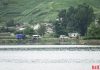
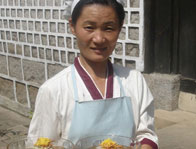
The North is thoroughly regulating photography in all places except for the historic sites. However, the tourists participating in the pilgrimages can see a portion of the cities which have been extinct for half a century, civilians and the countryside scenes of Kaesung’s extremities. Simultaneously, the Kaesung cuisine provided by the “folk inns” add to the flavor of Kaesung’s tourism.
Despite the up-to-dateness of Kaesung’s various tourist sites, the “confined tours” separated from the civilians are a disappointment.
The Youngtong Temple in Kaesung, as the place where Uicheon, the national high priest, learned his drills and masterminded the Cheontaejong around in 1070s, contributed to the revitalization of religious exchange between North and South regions. After the restoration of the site in 2005 by the South Korean Cheontaejong, religious exchange between the North and the South got active.
The reporter participated in the pilgrimage held by the Cheontaejong on the 25th and compiled photos for the readers.
[imText2]
[imText3]
[imText4]
[imText5]
[imText6]
[imText7]
[imText8]
[imText9]
The Sunjukgyo (a small stone bridge) located in Sunjuk-dong, Kaesung is famous as the place where Jong Mong Ju in 1392, was killed by Lee Bang Won (the First Emperor of Chosun Dynasty). It can be deduced that the bridge was built when the Koryo Emperor constructed the town of Kaesung in 919. According to the North, the blood-stain where Jong Mong Ju spilled his blood still remains. At the bottom of the Sunjukgyo is a faint red stain of about 50 cm.
[imText10]
[imText11]
At the Korea Traditional Museum, the wooden printing blocks with the Koryo Period typography containing the complete writings of Buddha, practical items reflecting the essential lives of civilians via the celadon porcelain, and metal types are displayed. Also, the steel Buddha, a national treasure, was moved from the Jeokjo Temple, Parkyeon-ri in Kaesung to the museum, and the inside of the King Kongmin’s Mausoleum located in Kaepoong-gun in Kaesung City is displayed.
[imText12]
[imText13]
[imText14]
[imText15]