

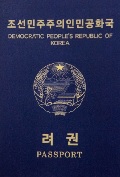
Every North Korean province permits a select group of individuals to travel to and from China relatively freely for provincial cross-border trading purposes. Their work, selling locally sourced and/or manufactured products to Chinese buyers, brings in essential hard currency to cash-strapped provincial People’s Committees, and for this reason these traders have come to play an integral role in regional administrative affairs.
Around a dozen such traders from each province are granted the right to enter into trade contracts with Chinese enterprises, and as de facto salesmen they must take frequent trips in and out of the country.
However, inside sources allege that last month’s purging and execution of Jang Song Taek precipitated an increase in surveillance targeting these traders. Rampant corruption in trade dealings was one of a litany of “anti-state” charges leveled against Jang by the Department of State Security military tribunal that ordered his death, implying the regime’s stark willingness to crack down on those who previously operated under Jang’s auspices.
Sources in South Pyongan and North Hwanghae provinces have revealed that these traders would have normally expected to travel north into China after obtaining permission from their provincial People’s Committee and the Foreign Affairs Division of the State Security Department. Should the necessary payments be made in full, the visa process itself would ordinarily be a formality. However, sources say that the execution of Jang Song Taek has complicated this process and made it more expensive, as traders are now obliged to seek additional approval from local security heads.
A source from North Hamkyung Province confirmed, “Cadres from provincial agencies, the State Security Department and the Ministry of People’s Security tend to maintain friendly relations with these provincial traders because everyone benefits from it. Therefore, it would normally be no trouble to get the seal of approval. But lately, traders have found it increasingly difficult to operate because they now have to get a letter of recommendation from their local head of security, too.”
The state has imposed this additional layer of bureaucracy in a bid to prevent traders from seeking asylum overseas, sources agree. Bringing in the requirement to obtain permission from local security organs allows for closer observation of the families of such traders, making the family unit as a whole less able to seek escape. North Korea has long employed a system within which families are kept at home to ensure the ongoing loyalty of nationals working abroad.
“One foreign currency-earner in Pyongsong told me that if traders want to get a visa issued this year, then they have to obtain the written consent of the head of security assigned to their local People’s Unit,” the source from South Pyongan Province affirmed. “Professional foreign currency earners used to be able to get a visa without this approval, but it’s become much stricter of late.”
The system requires applicants to renew their visas, which are normally valid for six months, twice per year. They must apply six months in advance for this process, which requires a trip to Pyongyang. Bribes are an essential element; it is common practice for traders to pay for 60th birthday celebrations for the parents of gatekeeper Party and security cadres, for instance, as a precursor to receiving a valid visa. For the traders, the new measures only add to the burden imposed by the corrupt North Korean system.
Prior to any overseas travel, traders are also instructed by the United Front Department of the Party on proper etiquette if required to meet with South Koreans and other foreign nationals. The same educational process is mandatory for customs officials and employees of foreign trading companies, too.
Meanwhile, citizens without the authority of a provincial trader continue to face the same severe travel restrictions as they have for many decades. The majority of North Koreans are not even permitted to enter foreign embassies in Pyongyang, much less to apply for a visa there. While limited travel to visit relatives in China is possible, a transit visa of this nature is not the same as an ordinary visa, and is only granted following a drawn out process requiring a number of recommendation letters.
In addition, the state is very selective about who it allows to enter China on such a visa, with both age and gender acting as deciding factors in the process. Bribery is again essential for anyone wishing to receive a visa in a timely manner.









