
North Korean farm workers barely surviving the annual “barley hump” — the spring food shortage period — are increasingly resentful of farm officials who continue to push for production goals despite dire conditions.
“In just one farm in Kumya county, more than half of farm worker households can’t manage even one proper meal a day, and there are more starving families than last year,” a source in South Hamgyong province told Daily NK recently. “This is already the hardest time for farm workers, but tone-deaf propaganda from farm officials is only increasing discontent.”
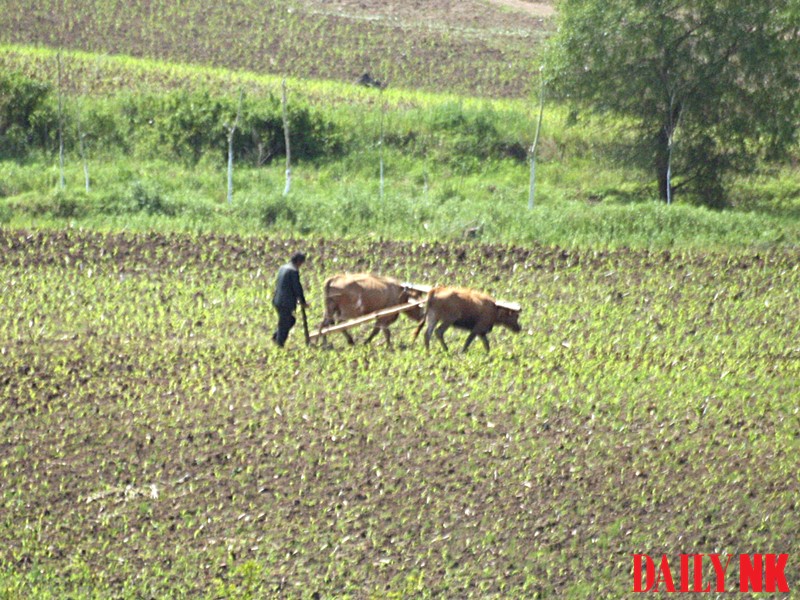
As the busy farming season begins, farm officials including party secretaries, management committee chairpersons and chief engineers visit fields daily to hold meetings with work team leaders and sub-work team leaders emphasizing production targets.
In late April, a management committee chairperson at one Kumya county farm gathered team leaders to stress that “we must achieve this year’s agricultural production plan through single-hearted unity.”
The chairperson instructed leaders to tell workers that “meeting production goals will increase distribution shares in the fall.” Farm workers reportedly responded with cold skepticism.
“As life gets increasingly difficult with no improvements, workers just scoff at demands for dedication and loyalty,” the source said. “Though they sit silently during study sessions and lectures, they unanimously complain when loyalty and dedication are demanded in the fields.”
Farm officials previously motivated workers with promises of distributions, but after repeatedly failing to deliver, such promises no longer work.
“Not a single farm worker believes the claim that ‘the harder you work and the more you produce, the more distribution you’ll receive in fall,'” the source said. “Workers no longer fall for these empty promises.”
Workers now direct their frustration toward team leaders who relay messages from farm officials without filtering them.
One sub-work team leader who repeated the management committee chairperson’s message about production goals and distribution reportedly faced angry responses. Team members told the leader they were in no state to hear such things and that it was nonsense to talk about production when there was nothing in their cooking pots.
“Being able to assess the situation and filter information is now considered a skill for sub-work team leaders,” the source said. “Everyone knows it’s hard to work on an empty stomach and that nothing comes back to them despite their labor, but they still have to work each day — that’s the reality for farm workers here now.”