

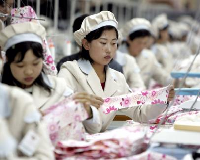
With a steady supply of state rations and
plentiful presents, foreign-currency earning state enterprises, which continue
to proliferate at a steady rate, currently rank high on the list of most popular
in-demand positions in the country, Daily NK has learned.
“Even if you have a manual labor job at one
of these foreign-currency earning enterprises, people still consider it
something huge to brag about,” a source in South Pyongan Province reported to Daily NK on May 8th. “Even
if only one family member holds a position at one of these organizations, he or she quickly
becomes the envy of others, who see such positions as gateways to all-around better livelihoods”
Foreign-currency earning enterprises, an umbrella term applied to organizations including–among others– trading companies, well-known to provide workers not only with basic rice rations [700g per day in the case of these enterprises] but
also soybean cooking oil, confectioneries, and even meat. Favorable quarterly
and annual production reviews often see the distribution of expensive goods to
workers, including highly-sought after items like Japanese-manufactured
bicycles, as well as imported electronics like televisions and computers, according to
the source.
For this reason, upon graduation from
middle school, many parents urge their children to enter higher education or
institutes focused on acquiring specialized skills, padding their
qualifications and boosting the probability of securing a job with one of these organizations.
“Foreign-currency earning enterprises
provide workers with new uniforms corresponding to each season; people
get so jealous when they see people sporting them in public,” she said, adding
that competition between the trading companies to offer up the best gifts
during holidays often results in greater benefits for the workers.
Conversely, regular state-run factories offer a glimpse at the other end of the spectrum. “A lot of them don’t run properly, so dreaming
about special rations and gifts is unfathomable for workers there, seeing as
how they don’t even receive even basic rice rations [currently around 540g per day at regular factories though rarely distributed], she explained. “This is
why skilled laborers who have spent their lives working in one field still want
to quit their jobs and land positions at foreign-currency earning companies.”
To this end, the source reported that those mired in life at state-run factories
have taken to seeking out Party cadres with county, municipal, and
provincial-level People’s Committees, charged with labor distribution and job
assignments, and lining their pockets to increase the odds of securing a position at any of a growing number of foreign-currency earning enterprises in North Korea.









