
[imText1]The government and private South Korean aid organizations are eager to send aid to flood-hit North Korea for recovery. However, no plans have been made to monitor the distributing process.
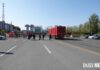
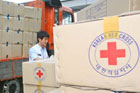
On 22nd, the South Korean government decided upon 10.5 billion won in aid for North Korea flood recovery. Since 23rd relief materials have been transported by the Kyungui road to Bongdong Station in North Korea where the authorities collect relief materials for distribution.
A person in South Korea authority said on 23rd, “although the aid distribution should be monitored, we have not talked about the monitoring process with the North since the situation demands requires immediate emergency relief effort.” The person said, “most of the relief materials are in the form of food such as instant noodles and bottled water, and they are difficult to monitor once consumed.”
However, international organizations like the World Food Program(WFP) have asked the North for transparent aid distribution, and the food distribution is now to be monitored in areas off limits to the WFP unlike the past.
According to Radio Free Asia’s report on 23rd, Paul Risley, Asia spokesperson for the WFP said, “The North Korean government allowed WFP staff to monitor food distribution not only in formally accessible areas but also other formally restricted out-of-the way places.”
WFP, moreover, proposed the North Korean authority to approve of adding additional personnel into the current staff of ten WFP employees and twenty native workers for the sake of thorough food distribution. The WFP is now expecting to hear a positive response from the authority.
“The North Korean government mobilized its public officials to distribute aid material to flood victims. And the UN, Red Cross and volunteers are all participating in the process of distribution to make sure aid materials are properly distributed,” said Elizabeth Byrs, spokesperson for the United Nations Office for the Coordination of Humanitarian Affairs (OCHA).
Unlike the South Korean government, international organizations strive to aid North Korea in the transparent way, despite the fact that relief materials are in urgent need. That’s because a number of the priviledged has been suspected of skimming off aid materials.
In fact, during the train explosion in Ryongcheon in 2004, a huge chunk of aid materials failed to reach those who desperately needed them due to corrupt officials who pocketed relief aid.
A source from Ryoungcheon said “The officials and distributors of the disaster recovery commission played favoritism providing more aid relief for those in good terms with them and providing nothing for those who are not.” The source added, “Some aid relief were even circulated on the market by the officials.”
Meanwhile, in response to the flood disaster in North Korea last year, the South Korean government sent through the KNRC (Korea National Red Cross) one hundred thousand tons of rice, another one hundred thousand tons of cement, 5 thousand tons of reinforcing rod, 210 units of materials and equipments, dump trucks or other construction equipment, eighty thousand blankets, and 10 thousand first aid kits. The South finished delivering the total aid package worth 221 billion won (approx. USD 237.6) in June of 2007. However, no monitoring had ever been conducted for this aid.
“We did not have enough time to discuss monitoring the aid distribution with the North since we had just finished delivering the aid for flood disaster in June this year.” said a South Korean government official.
However, a matter of transparent aid distribution has been an issue for so long that lack of time cannot be an excuse. Experts on this matter all point out that the problem lies in the lack of will on the South Korean government to execute the relief efforts as transparent as it should be.