

Ever since the May 24th measures were imposed by the South Korean government last year, North Korea has seen a sharp increase in its economic reliance on trade with China.
Bae Jong Ryeol, a senior researcher with Korea Eximbank, revealed that North Korea has greatly increased exports to China in areas such as minerals, manufactured products and clothes. This is to compensate for losses and various other forms of damage that has resulted from the suspension of trade and exchanges between North and South.
Speaking at a seminar entitled ‘Prospects and Challenges for Inter-Korean Relations’, held on the 6th at the Korea Chamber of Commerce and Industry, Bae pointed out that the quantity of North Korea’s exports to China increased by 203.6% during the first half of 2011 when compared to the previous year, amounting to $ 1.56 billion dollars. Conversely, imports only increased by 54.6%, to around $1.45 billion.
North Korea’s main exports in 2011 were coal and iron ore, while there has also been a rapid increase in light manufacturing exports such as garments sent to China via Liaoning Province.
Therefore, Bae explained , “It is necessary to resolve issues such as the North’s nuclear program, the Cheonan incident etc., but in the context of China and Russia’s recent regional policies, if North Korea’s will to reform and open were to be confirmed, we should gradually reduce the strength of the May 24th Measures.”
He added, “It is necessary to achieve a balance between influence in the areas of politics, the military, security and influence in economic exchanges,” going on to reaffirm the importance of continually reassessing the May 24th Measures against the backdrop of reforms and liberalization measures undertaken by the North.
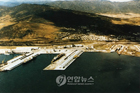
Bae proposed that certain measures be re-examined, such as: ▲ visits to Rasun by South Korean entrepreneurs; ▲ re-opening maritime routes between the ports of Busan and Rajin; and ▲ processing trade in the Pyongyang-Nampo region.
Elsewhere, Park Jong Cheol of the Korea Institute for National Unification (KINU), spoke about how, following the replacement of the Minister of Reunification, inter-Korean relations are gradually shifting toward an atmosphere of greater dialogue, noting, “The pending issues confronted by South Korea today, such as the Cheonan and Yeonpyeong Island incidents, tourism at Mt. Geumgang etc. can only be resolved through greater high-level, not working-level, inter-Korean dialogue, in order for South Korea to advance in a new direction.”







