

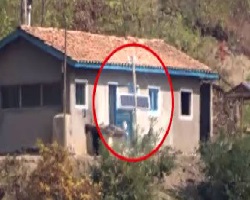
Facing continued struggles from a shortage
of power, North
Koreans have been increasingly using solar energy, and with this
change, more electronic goods and accessories that are compatible with this alternative power
source are springing up in the North, Daily NK has learned.
“Due to the fact that most people are using
solar panels because of our chronic power shortage, for obvious economic
reasons, electronic goods designed to run on 12V are far favorable to those
calibrated for the state standard 220V,” a source in
North Pyongan Province told Daily NK in a telephone conversation. “This applies not only to the imported
goods from China but those made in the North.”
Two additional sources in South Pyongan
Province corroborated this news.
Plagued by power outages, people no longer
rely on state-produced energy and instead power their goods–everything from
TVs, refrigerators, fans, and washing machines–with green energy.
“The 12-volt solar panels have become the
general source of power for electronic products, so 220V goods have mostly been
rendered useless,” she said, explaining that the low
supply of electricity means that the voltage of state supplied power cannot
easily meet the standard voltage of 220 V, which is why transformers have long been indispensable items for North Korean families.
Solar power has ushered in a host of new possibilities, however, the source said, noting, “Depending on their income levels, residents buy
different solar panels from the marketplace to use their lights, ‘notetels’ (a type of portable
media player from China), and televisions.”
As lower voltage products became more
widely used in the North to get more longevity from the panels’ stored power, products coming in from China have also started to reflect
this changing trend. The protracted electricity shortage has also yielded handsome profits for
Chinese solar panel producers pushing their product over the border. Perspicacious North Korean market vendors are
also benefiting, ramping up their efforts to keep up with the domestic shift to eco energy.
“No matter how good a solar panel you have,
if you don’t have a converter, you can’t use a 12V product, so now there are vendors selling those at the
market,” said, explaining how sellers are rising to
meet increasing demand.
Until recently, most people used to cobble together parts
to either make their own converters and/or transformers or pay someone with the
expertise to handle the wiring. Now, however, merchants are seeking family
members or acquaintances with the know-how to make 12V-compatible converters
and then hawking them at their stalls.
According to the source, in order to
power goods with solar panels, people first charge multiple batteries [most
typically car batteries] and then hook up the converter to use the 12V
products. Party cadres and the donju [new affluent middle class] use 50W solar
panels, while the average person uses a 30W panel to charge a 28A battery.
A 30W Chinese panel currently goes for 38
USD, while a North Korean 28A battery fetches roughly 30 USD. One U.S. dollar
at North Pyongan Province’s Sinuiju Market trades for
about 8,700 KPW.
Par for the course, the ever-expanding
market system provides for residents what the state cannot. “They (residents) say the power plant up there is for decoration, and
the marketplace is where the real electricity is being produced, so they should
call the market the ‘people’s
power plant,” the source concluded.
*The content of this article was broadcast to the North Korean people via Unification Media Group.









