
Movies depicting Chinese military sacrifices during the Korean War are spreading along the border, prompting viewers to question decades of state education that attributed victory solely to Kim Il Sung’s leadership.
A source in Ryanggang province told Daily NK recently that the two movies have become popular along the North Korean border with China. “People who have seen the films have expressed shock about what the films have taught them about the Korean War,” the source said.
“The Battle at Lake Changjin,” released in 2021, details an episode also known as the Battle of Chosin Reservoir that is regarded as one of the fiercest campaigns of the Korean War. The film depicts how Chinese troops prevailed over the American military despite the intense cold and hostile terrain, a patriotic lens that made it a smash hit at the Chinese box office.
“The Sacrifice” is another patriotic Chinese war movie, reaching theaters a year before, in 2020, on the 70th anniversary of the outbreak of the Korean War. This film focuses on the Battle of Kumsong, fought in Cheorwon county of Gangwon province in the final days of the Korean War. The story centers on a Chinese unit mounting a last-ditch defense of a bridge being bombed by the U.S. military.
According to the source, North Korean viewers of these films say they had always regarded slogans about “North Korea-China friendship” or “friendship forged in blood” as being abstract slogans but have gained a new appreciation of the immense sacrifice made by Chinese forces (called the People’s Volunteer Army) during the Korean War.
North Korean films downplay Chinese role in war
North Korea has also made movies about the Korean War, including films covering battles at Hill 1211 and Hill 351. But all those films are focused on North Korean combat victories without paying much attention to the role or contribution of Chinese forces.
Chinese troops did get some screen time in the North Korean film “A New Legend on the Piryu,” but even that was limited to a brief episode in which Chinese soldiers rescue a North Korean student.
In contrast, “The Battle at Lake Changjin” and “The Sacrifice” contain numerous realistic depictions of the horrors of war, including Chinese soldiers freezing to death in the terrible cold and a unit being wiped out while defending a crossing. Astonished North Koreans have remarked that they had “never known about the tremendous hardship and sacrifice of the Chinese troops because the government never told us about it.”
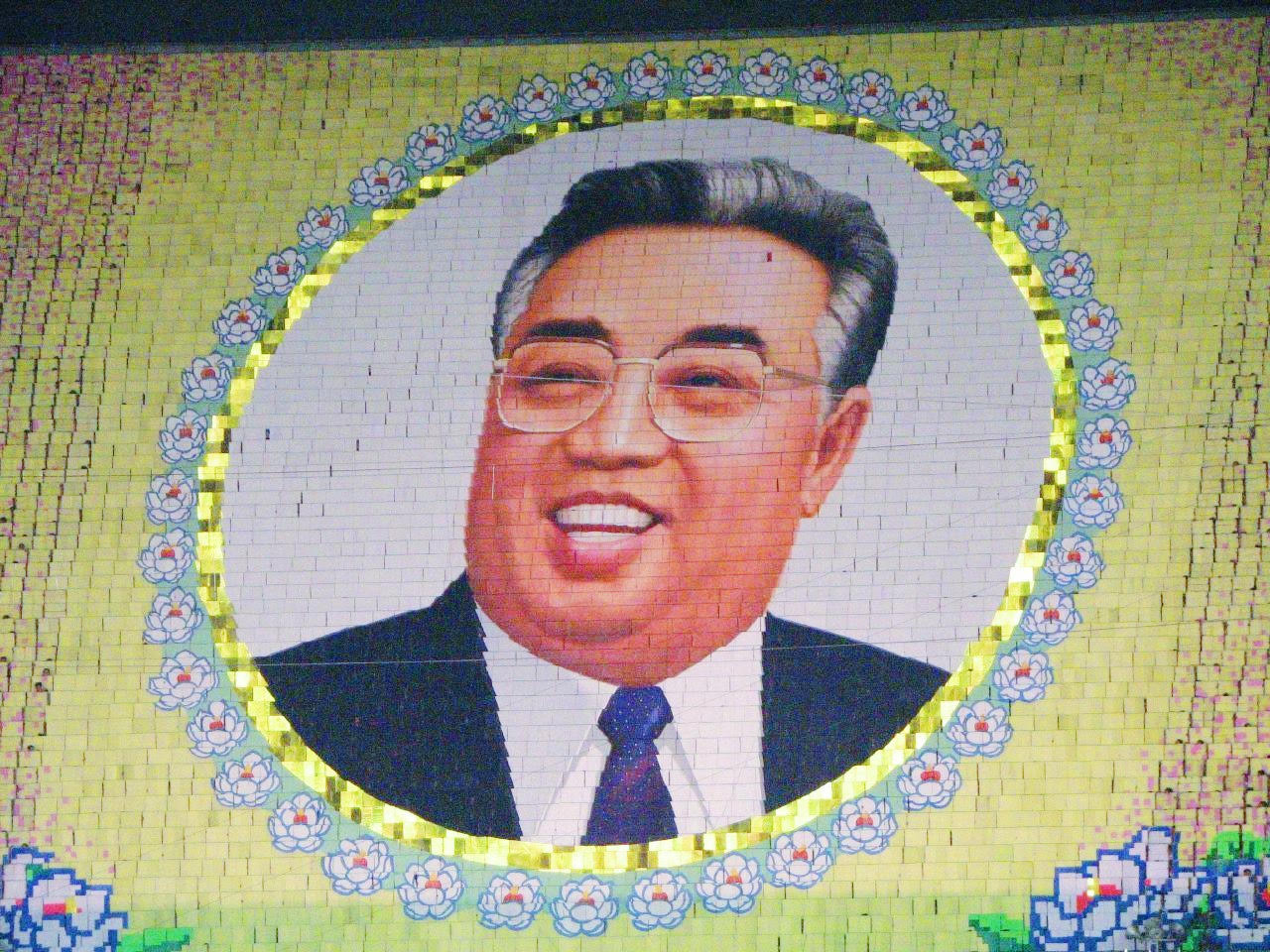
In regime propaganda, North Korea claims victory in the Korean War, which it attributes to the leadership of Kim Il Sung, the country’s founder. North Korea treats Chinese troops as little more than evidence of the two countries’ friendly relations without detailing their sacrifices or their decisive contribution to the war.
“These Chinese movies place the Chinese forces’ sacrifices front and center. But North Korean movies and history books only emphasize the greatness of our leader and the combat ability of our military, without even describing the Chinese sacrifices. Because of these Chinese movies, many North Koreans find themselves wondering how the war would have gone without the Chinese forces,” the source said.
In effect, Chinese movies about the Korean War are giving North Koreans a new critical perspective on regime propaganda.
“A single Chinese movie has flipped the script on the history we’ve learned. Film viewers are realizing for themselves that history education here is divorced from reality,” the source said.