

[imText1]While religious activities are seen one of the most threatening challenges to the North Korean regime, it is believed that the North Korean authorities are not as cautious in regards to religious crimes. Often, those who are caught committing religious crimes can escape punishment with bribery.
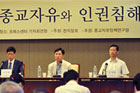
On Wednesday at the Press Center in Seoul, Kim Young Hwan, editor of the Zeitgeist, speaking at a forum on “North Korea’s Religious Freedom and Human Rights Violations,” said that, “Although someone is suspected of religious crime violations, the suspect is not officially indicted but instead blackmailed into bribing the officials.”
Kim added, “Even if one is indicted of a religious crime, investigators report to the higher authorities vaguely. Then the investigators declare the suspect not guilty or convict them of a lesser crime if they have been bribed.”
Those who cannot afford to bribe are used as informants or double agents instead of being punished, Kim added. Kim also emphasized that, “Because of an increase in ‘fake’ religious believers in North Korea, the level of persecution has declined. There are real believers, fake believers, and informants all mixed together,” and South Korean Christianity community “needs to understand the reality of religious organizations inside North Korea.”
He explained that 70 to 90% of religious believers in North Korea are fake ones who only wanted food or monetary assistance, quoting missionaries and secret believers. However, included among this group are also ‘semi-believers’ who have gained interest in religion through their activities.
Kim argued that, “While the Kim Jong Il regime exists, any kind of religious freedom cannot be expected, and removal of the dictatorship and bringing democracy and freedom is the only way.”
President of Open Radio Ha Tae Keung, said “Christianity and the current North Korean regime are incompatible, and expecting Kim Jong Il or Kim Jong Eun to allow Christianity in North Korea is a mere dream.” He also argued for the South Korean Christian community “to prepare for the post-Kim Jong Il regime.”







