
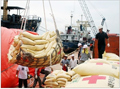
North Korea recently refused South Korea’s flood relief aid. The South Korean government had offered 10,000T of wheat flour, 3 million units of instant noodles and medical supplies all worth 100 million South Korean Won, but North Korea rejected it, calling the offer derisory.
Analysts say the first reason for the refusal was because Pyongyang only wanted rice, cement and heavy machinery. In this way, the North Korean regime stated clearly that they do not care about the people and thus will not accept aid that does not help the regime.
Daily NK subsequently investigated the issue and, as expected, found out that the ordinary people of North Korea did not know that their leaders refused flour and medical equipment that could have been use for their own good. Understandably, the claim that the Kim Jong Eun regime puts its own interests first rang out from all sides.
Kim Young Chul, who spoke to Daily NK from Onsung County in North Hamkyung Province, commented, “I could not know that the authorities rejected support from the South’s government, but I cannot understand why they would do that when people are suffering because of the flooding. I am not sure if the aid would have come all the way to us anyway, but we certainly cannot eat what is not here.”
“To be frank, people feel that it doesn’t really matter what the aid is because whether it is instant noodles or rice it will not be given to the homeless people. They prefer rice and cement to flour and instant noodles because to them the system is more important than the people,” Kim went on.
Defector Song Jae Kwon (50), who resettled in South Korea just last year, added, “Obviously they will inform the people that ‘we flatly refused aid from south Chosun because it was only given for their own political purposes’,” before dismissively adding, “Almost nobody ever receives flood aid anyway, so it it’s pretty unimportant whether they accept it or not.”
However, the truth is that there is some modest benefit for the people, for as Song also noted, “That being said, if food aid goes into the markets most prices will go down, and that does make the lives of the people easier.”