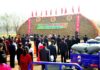


The ‘17th ITF Taekwondo World Championships’ are to be held in Pyongyang starting on the 6th of next month, the first time the competition has been held in the North Korean capital since 1992.
The North Korean media first revealed news of the tournament domestically when it announced in February the renovation of the venue for the championships, the Taekwondo Palace in Angol Sports Village, in the Mangyongdae area of the city.
It is a move which has given rise to varying interpretations, with the major themes being money, Kim Jong Eun and a long-running battle over exactly where the true home of taekwondo can be found.
According to one source, North Korea plans to “hold in Pyongyang the biggest international sporting event since Kim Jong Eun was revealed to the public as the successor in order to nominate itself as the natural home of the ITF,” while, “Internally, it will be to congratulate Kim on his succession and through the presence of attendees and competition publicity underscore his status as a leader in the international community.”
“In large part they are hoping to earn foreign currency from participants,” the source also said.
Certainly there is hard currency earning potential, with lodging fees to be paid in Euros, entry fees for competitors of $90 each, and no credit cards accepted.
Meanwhile, neither this nor the relative expense and difficulty of reaching the North Korean capital has reportedly stopped international entrants; according to Chosun Sinbo, the publication put out by Chongryon in Japan, more than 800 participants from more than 80 countries have already applied to take part in the tournament, including Russia, China, Uzbekistan, Kazakhstan, Britain and Canada.
Yet, the scale is also being questioned, particularly by competing taekwondo operations. The sport is highly factionalized, with the IOC-sanctioned World Taekwondo Federation, the ITF itself and a number of other, smaller groups.
To make matters worse, the ITF split into three factions following the death of its founder, former South Korean military man General Choi Hong Hee, in Pyongyang in June 2002, and since then there has been a fight for legitimacy; last July, over 3,000 athletes from more than 60 countries participated in one, the ‘11th ITF World Championships’ held in Cheongju, South Korea.
Indeed, one representative of the South Korean ITF, countering the North Korean claim to legitimacy in an interview with The Daily NK on Thursday, said, “There are only 16 members of North Korea’s ITF, mainly countries with which North Korea has diplomatic or military relationship, such as Kyrgyzstan.”