[imText1]“One day, an official from the National Security Agency came to my husband and said, ‘From now on, I am in charge of you.’ It baffled us. The one in charge of oneself must be the person; I couldn’t understand; how would he be in charge of my husband?”
The author of a novel based on her own experiences, “Want to Be a Human Being” (Essay, November, 2009), Kim Hye Suk recalls well the day when her husband, a researcher at the Academy of Science for Defense with responsibility for nuclear development, was dismissed from his position following an incident.
“There must have been NSA officials in charge of my husband because it was the time when North Korea was insisting that the imperialist America and South Chosun (Korea) were threatening us and saying we had obtained nuclear weapons we didn’t really have,” she remembers. “It was because nuclear developments were top-secret.”
“Those who were involved with any secret activity such as nuclear development had to sign a pledge that they would be held fully responsible for anything which might happen should a secret leak out.“
Eventually, her husband, who had been a part of nuclear development activities since the early 1980s, was exposed to radioactivity and had to leave his job.
Immediately after the accident he was sent to Bonghwa Hospital, which only high officials could use. In the hospital, however, there were no special treatments for him with exception of eggs, vitamin supplements, meat and six months of some kind of medicine, she explains.
He had suffered serious damage to his liver, and his teeth were all gone. She said, “He used to be a really good looking guy, but over several years turned almost into a grandfather. He suffered from hallucinations and nightmares every night. And, eventually, bedsores appeared on his back where he had lain for a long time.”
From the day when she first met the NSA official, other officials frequently dropped by her house without notice. Kim explained what she felt at the time, “You can never know the feeling of being constantly monitored. As a consequence, my husband showed symptoms of schizophrenia and later suffered from acute anxiety attacks.”
As monitoring by the NSA got more serious, her husband’s condition also deteriorated. It was a real ordeal for her. Eventually, she decided she had to escape from the hardship, crossing the border and leaving her husband in 1998.
However, her “freedom” did not last long. In 2003, she was caught by the Chinese police and repatriated. Then, she faced even more serious hardships; physical violence and even sexual harassment within a reeducation camp.
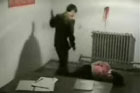
“When defectors are repatriated, naked body searches are a basic step. Interrogators put their hands into our vaginas to look for money we may have earned. Jumping up and sitting down naked hundreds of times is the next step. We call it ‘pumping.’”
“When I was released from the camp after suffering all kinds of hardships, I weighed 25kg,” she said calmly. “I don’t know whether or not they would have liked to deal with a corpse; they called one of my family members to take me home.”
After she got home, monitors were always around her, she says. Even the chairperson of my neighborhood People’s Unit followed me, and other neighbors also monitored me closely.
She made up her mind then to leave North Korea for ever so as to avoid the gazes and hostile treatment of others. In 2007, she succeeded in reaching South Korea.
Meanwhile, her husband has been imprisoned in the completely controlled zone of a political prison camp for murky reasons. Understandably, she is reluctant to talk about him for the sake of family safety.