
[imText1]In order to stop infringement acts of human rights occurring in North Korea and against defectors, many people are supporting the idea that an archive database recording the violations of defector human rights needs to be urgently established.
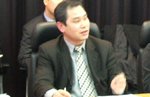
Representative Yoon Yeo Sang of the Database Center for North Korean Human Rights and Lee Gun Ho, a legislative researcher at the National Assembly Library recently co-presented a paper titled “The significance of the German Socialist Unification Ministry’s violating acts archive database and North Korea policy by participating governments” to the Korea Institute for National Unification.
The paper argued “Anti-humanitarian acts by North Korean authorities towards defectors has passed the stage of being left alone” and proposed “The fact that a central document archives was established to record and conserve human rights violations against refugees from East Germany prior to the unification of Germany is a huge foretaste for us.”
Further the paper contended “The role of the central document archive of Germany was basically to record the infringements of human rights in West Germany on East German refugees” and explained “Through the archive database they tried to keep all the specific and detailed information regarding the violations of human rights against East German refugees, as well as the number of deaths that occurred while escaping from open fire to mines to the amount of automatic rifles and equipment, from being buried under the ground.”
The German archival database argued “The existence of archives cannot be said to be a simple dutiful affair to preserve information” and said “The establishment of an archive database is a symbolic gesture to the political leaders of East Germany that the violating acts of human rights will ultimately not be forgotten.”
“Later on (after the reunification of Germany), this abuse of human rights will not be viewed idly but will send a strong message to the citizens of Germany that responsibility will be taken, and from the perspective of unification, symbolize a firm belief on the unification of the German people” they explained at the time.
In addition they argued “In fact, not only did the archive database firmly regulate pressure in developing and preventing human rights violations prior to the unification of Germany, even after Germany’s unification, the documents recorded greatly contributed to solving the cases of East German refugee human rights violations that the Unification Party had to inquire.”
Moreover, the paper claimed “Today, the archive database continues to be proactive in leading the case of human rights abuse against defectors and acts as a precautionary link to human rights abuses that the ruling government cannot take a clear stance on. Hence, it plays an important role in recording, safeguarding and administering cases of human rights violations.”
“As suggested by its title ‘Violations of Defector Human Rights Archive Centre,’ the fundamental and critical significance of the database is to record and preserve the acts of human rights abuses against defectors” the paper continued and asserted “It indicts anti-humanitarian acts by North Korea’s government leaders and has a great counter-effect in stopping, pressurizing and controlling acts of human rights violations.”
The paper maintained “There has been much criticism on the position of our government which has been idle on the issue of North Korea’s human rights” and said “Though it may be a passive approach, establishing a database ‘Violations of Defector Human Rights Archive Centre’ with similar features (as the German database) will signify some change and hope in being proactive against the violations of defector human rights.”
In 2005, in his term in the National Assembly the current Governor for Gyeonggi Province Kim Moon Soo even gathered a collection of information submitting a “North Korean Human Rights Bill Enactment to the National Assembly” which included a collection of information on North Korea’s anti-humanitarian offenses and proposed that a “North Korea Human Rights Archive Centre” be established.