
Electricity supply in Sinuiju, North Pyongan province, has improved somewhat in 2026 compared with last year. Neighborhoods near provincial and city party offices, the National Intelligence Agency (former Ministry of State Security), the Ministry of Social Security, customs offices and trading companies, along with apartments in the city center, now receive an average of six to eight hours of electricity a day.
Nighttime satellite imagery backs up part of that account. Analysis shows brightness has increased in downtown Sinuiju and on Wihwa Island. But power supply still varies widely by neighborhood, income level and institutional ties, making it hard to conclude that Sinuiju’s broader electricity problems have eased.
What satellite images show
Daily NK’s AND Center, the organization’s satellite imagery analysis team, examined nighttime light data from the VIIRS instrument aboard the Suomi NPP satellite, which is jointly operated by the U.S. National Oceanic and Atmospheric Administration and NASA. The satellite passes over the same location nightly around 1:30 a.m., allowing the team to track lighting changes around Sinuiju and Wihwa Island over time.
Sinuiju suffered record flooding in late July 2024. A large housing complex was built along the Amnok River (Yalu River) to house displaced people and was completed that December. Kim Jong Un then ordered construction of a large greenhouse farm on Wihwa Island, which was completed February 1, 2026, after about a year of work.
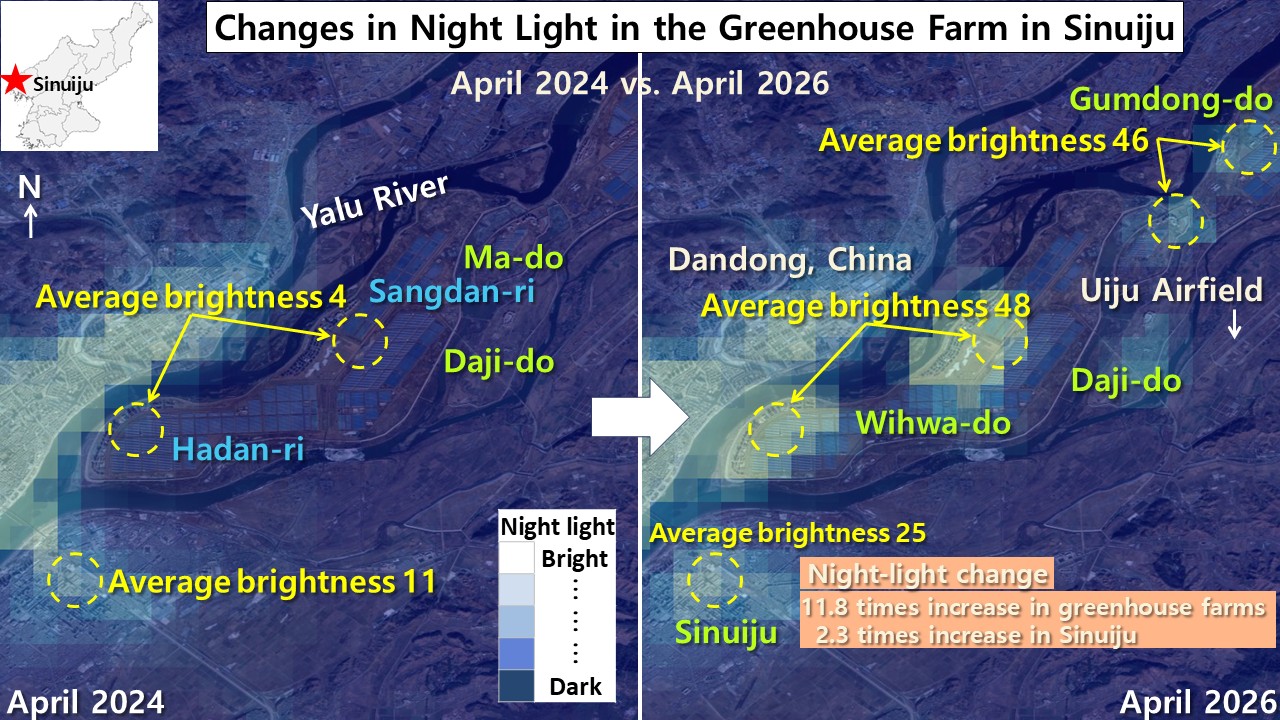
The AND Center compared monthly average nighttime light data from April 2024, before the flood, with April 2026, after both projects were finished. Monthly averages reduce distortion from clouds, moonlight and other atmospheric conditions that can skew single-night images.
The results show a clear increase. In April 2024, downtown Sinuiju had an average brightness value of just 11, with surrounding areas mostly dark. By April 2026, downtown brightness had risen to 25, roughly 2.3 times higher, reflecting increased nighttime lighting and electricity use tied to flood recovery.
The change was even sharper around Wihwa Island. Hadan and Sangdan villages had an average brightness value of about 4 in April 2024. By April 2026, after the greenhouse farm’s completion, brightness across Wihwa Island and the nearby islands of Mado and Geumdong had risen to between 46 and 48, an increase of about 11.8 times, driven by the greenhouse complex’s lighting and power systems.
Where the light gains are concentrated
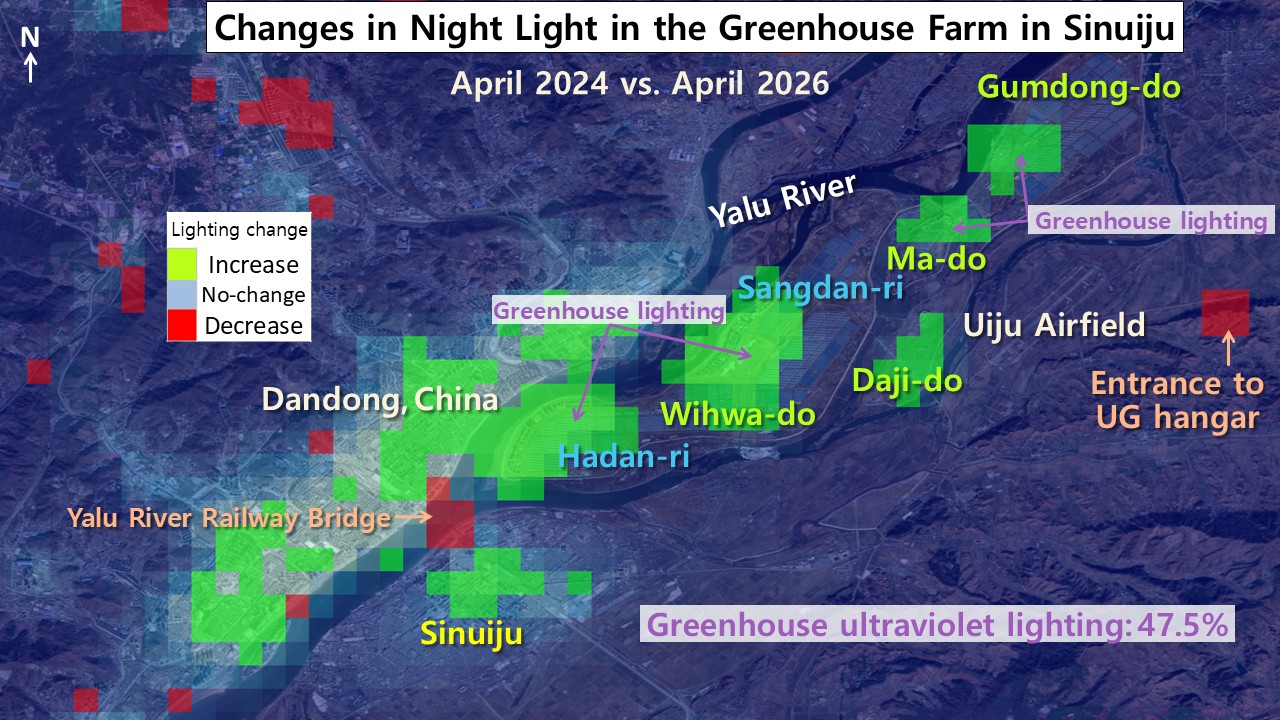
To pinpoint the changes more precisely, the AND Center applied image differencing, a common satellite analysis technique run through the software ERDAS IMAGINE, comparing the same monthly average images from April 2024 and April 2026.
The technique confirmed clear light increases in downtown Sinuiju and on Wihwa, Daji, Mado and Geumdong islands. About 47.5% of the greenhouse complex’s total area showed increased nighttime lighting, suggesting roughly half the complex uses supplemental lighting rather than all of it.
Greenhouses commonly use LED grow lights at night or on cloudy days to compensate for insufficient sunlight. Combined with sensors that automatically manage growing conditions, a method known as smart farming, this can boost crop growth and yields.
Areas of decreased lighting were limited. Some mountainous areas on the Chinese side dimmed, while inside North Korea, lighting decreased near the Amnok River rail bridge and the entrance to an underground hangar at Uiju airfield. It isn’t possible to determine the cause from satellite data alone. Most other parts of North Korea showed little change, since those areas already had minimal nighttime lighting in both periods.
Radio Free Asia also reported that Sinuiju’s nighttime skyline looked different when viewed from Dandong, China, in early June. The outlet said imagery captured at 1:30 a.m. on June 10 showed bright lighting across downtown Sinuiju and Wihwa Island.
Still, satellite data and outside observation alone cannot confirm that the increased lighting means North Korea’s broader electricity shortage has eased. Nighttime light data can show where brightness has increased, but it cannot distinguish between electricity reaching individual households and power used for roads, institutions, factories, greenhouses or propaganda facilities. NASA describes its VIIRS Day-Night Band data as a tool for observing human activity through visible and near-infrared light, not a direct measure of how electricity is distributed.
Downtown brighter, outskirts still dark
Daily NK’s source in North Pyongan province said downtown households typically receive electricity in short blocks: about an hour between 5 and 7 a.m., roughly two hours at midday, an hour around dinner and another hour late at night. On good days, power can run for about three hours at night.
“Electricity has gotten somewhat better this year compared to last year,” the source said. The source added that authorities appear to be paying closer attention to supplying Sinuiju with power this year. But the improvement isn’t uniform. Supply hours and reliability differ sharply by neighborhood.
Power is comparatively stable in the Ponbu, Sinwon, Yokchon, Chaeha, May 1, Namsang, Namjung and Namha neighborhoods in the city center, close to party offices, security agencies, customs, trading companies and commercial districts. The Chinson 1st and 2nd, Pangjik, Tongha, Tongjung, Tongsang and Kwanmun neighborhoods, industrial and residential areas on the edge of the old downtown, receive somewhat less consistent but still comparatively reliable power.
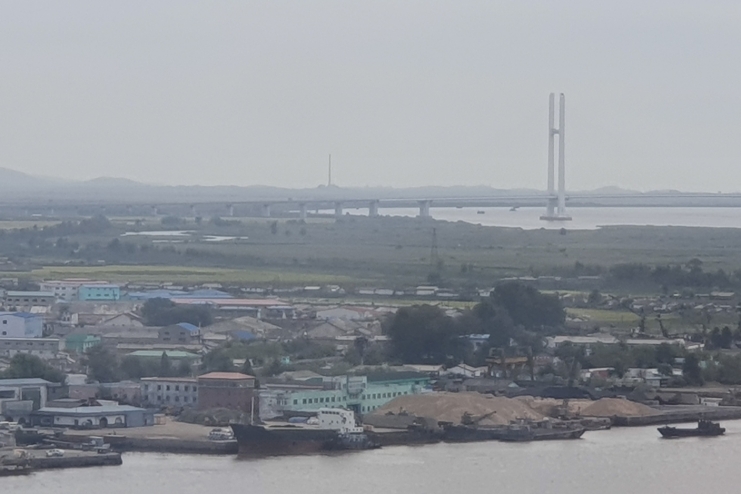
That prioritization of riverside and institution-heavy areas helps explain why Sinuiju’s waterfront looks brighter than before from the Dandong side of the border. By contrast, South Sinuiju neighborhoods including Ryonsang, Ryusang, Rakwon, Sokha and Pungso, each split into 1st and 2nd sections, have comparatively unstable power.
Supply tends to follow a predictable schedule tied to daily routines: early morning before work, lunchtime, dinner and late at night. During holidays and political events, the source said, power “always comes without fail,” a pattern that reflects city management and image control more than resident convenience.
Two explanations for the improvement circulate locally. One is seasonal: North Korea relies heavily on hydropower, and generation typically drops from mid-November through spring due to low water levels, freezing and aging equipment, then improves during the summer rainy season. The other is Sinuiju’s status as a border city visible from China. “Attention from the party has focused more on Sinuiju than on inland areas recently,” the source said, adding that power is being sent more reliably to the side of the city facing China.
Industrial power use follows a different pattern than household supply. Sinuiju factories reportedly maintain 24-hour, three-shift production through cross-production methods despite shortages, and export garment factories linked to trading companies often receive continuous power, a sign that authorities prioritize foreign currency earning and export production over household electricity.
Even factories aren’t uniformly secure. Some have backup generators for outages, but rarely run them continuously; generators are typically reserved for hospitals, statues and other priority facilities during emergencies. Some factories have expanded solar power use, though it isn’t enough to fully cover production needs.
Households turn to solar power, not the grid
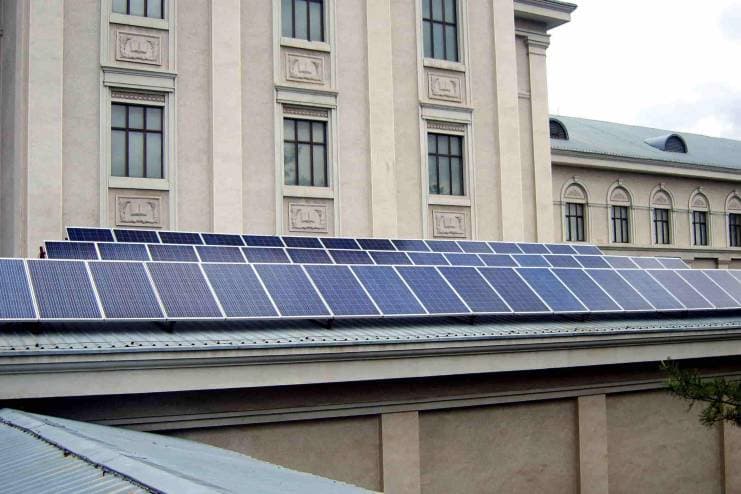
North Korean people have long adapted to chronic shortages through self-reliant workarounds, chiefly solar panels and storage batteries. In Sinuiju, most households reportedly now use some form of solar panel. Wealthier households install larger panels, while poorer households rely on smaller panels and batteries for lighting or charging phones.
Panel size has become something of a status marker. “You can tell how well-off a household is by what kind of solar panel they use,” the source said. Many ethnic Chinese households in Sinuiju reportedly use larger panel and battery setups to power televisions, refrigerators and lighting almost entirely on their own.
Most other households use solar power only for lighting, phone charging and small television use, since running refrigerators, rice cookers or business equipment requires larger, more expensive systems, reinforcing the divide between wealthier and poorer families.
Electric bicycles and scooters have also grown popular in border areas recently. Most people charge them at home, though some with factory or workplace access charge them there, often without paying, giving those with institutional ties another advantage.
Crackdowns on illegal electricity use continue, though outright theft, such as illegally tapping factory lines, has declined since past cases drew harsh punishment. “Enforcement around electricity use is still strict,” the source said. “It’s not as easy as before to illegally hook up wires.”
Authorities continue to emphasize normalizing power production and conservation campaigns, increasingly tying the message to local industrial development. Resident reactions are mixed. Some see the renewed attention as a positive sign, while others are skeptical, questioning the point of building factories without reliable power to run them.
For North Korean people who lived through decades of near-total blackouts, even the current level of supply is seen as an improvement, enough to cook meals, charge phones and watch television on a set schedule. But the gap in access has become one of the clearest markers of inequality in the city. Wealthier households run refrigerators and televisions freely, while poorer households make do with a single charging light or wait out the night in the dark.
“Sinuiju’s nights are definitely brighter than before,” the source said, “but that doesn’t mean every household is getting proper electricity.” The source added that power is still being prioritized for border-facing areas, government offices and export factories, while most people continue to rely on solar panels and batteries, timing daily tasks around whenever the power comes on. “The gap between rich and poor, center and outskirts, is only getting sharper,” the source said. “These days, how much electricity a household uses has become a measure of how well that family is doing.”